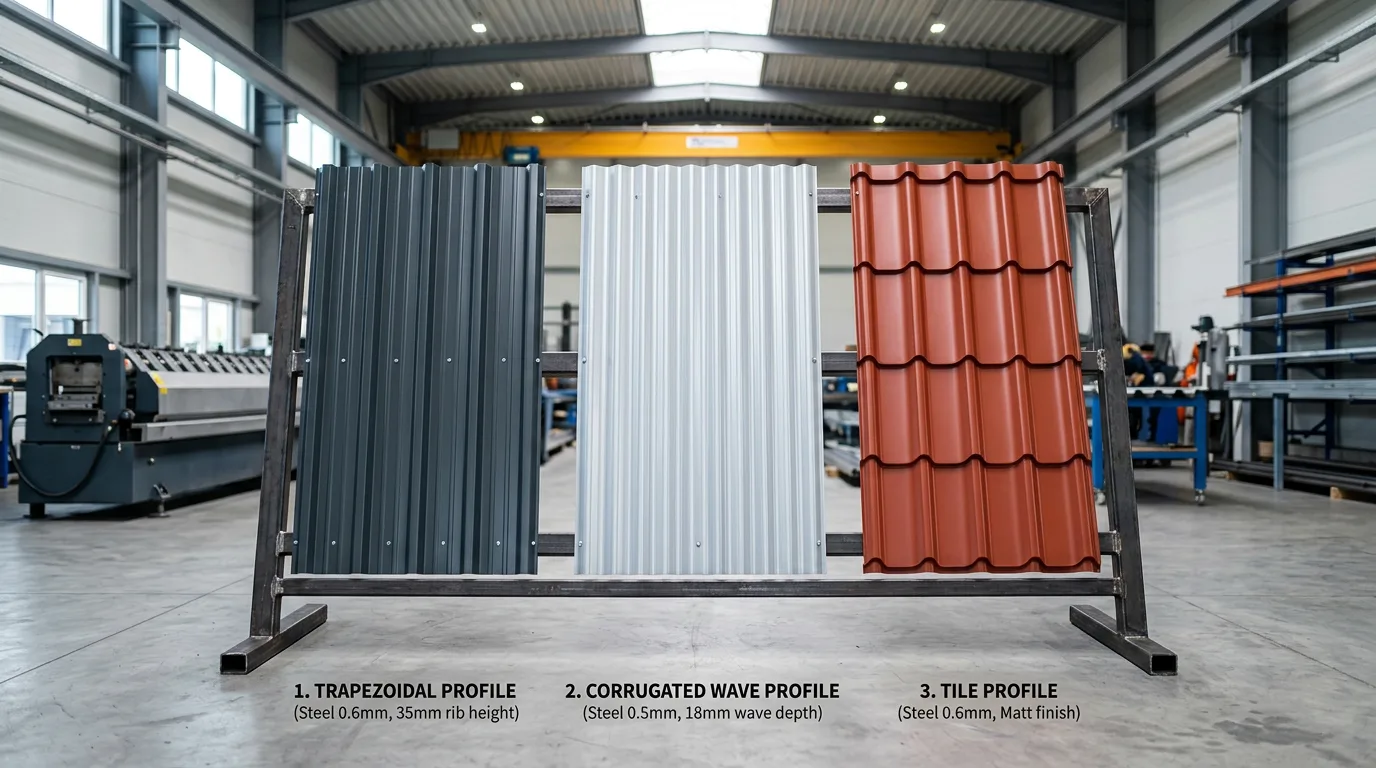
Trapezoidal vs corrugated vs tile metal roofing sheet comparison

How do different corrugated roofing profiles—trapezoidal, wave, and tile—compare for performance and suitability?

How Do Different Corrugated Roofing Profiles—Trapezoidal, Wave, and Tile—Compare for Performance and Suitability?
Trapezoidal vs corrugated vs tile metal roofing sheet comparison  
Different roofing profiles offer varying performance in strength, appearance, and application.

When choosing metal roofing sheets, many buyers focus only on thickness or coating—but the profile shape itself plays an equally important role. Trapezoidal, wave (corrugated), and tile profiles each behave very differently in terms of strength, drainage, appearance, and cost.

Understanding these differences helps you avoid overpaying, prevent performance issues, and select the right product for your specific project.

Overview of Common Corrugated Roofing Profiles

Trapezoidal, wave, and tile profiles differ significantly in geometry and application.

There are three main types of metal roofing profiles widely used in global markets:

  • Trapezoidal profiles – Characterized by flat pans and high ribs, designed for strength and structural performance.
  • Wave (corrugated) profiles – Traditional sinusoidal shape, known for flexibility and simplicity.
  • Tile profiles – Designed to replicate the appearance of clay or concrete tiles, mainly for residential use.

Each profile serves a different purpose. There is no “one-size-fits-all”—the right choice depends on how the roof will be used.

Strength and Aesthetic Comparison Among Profiles
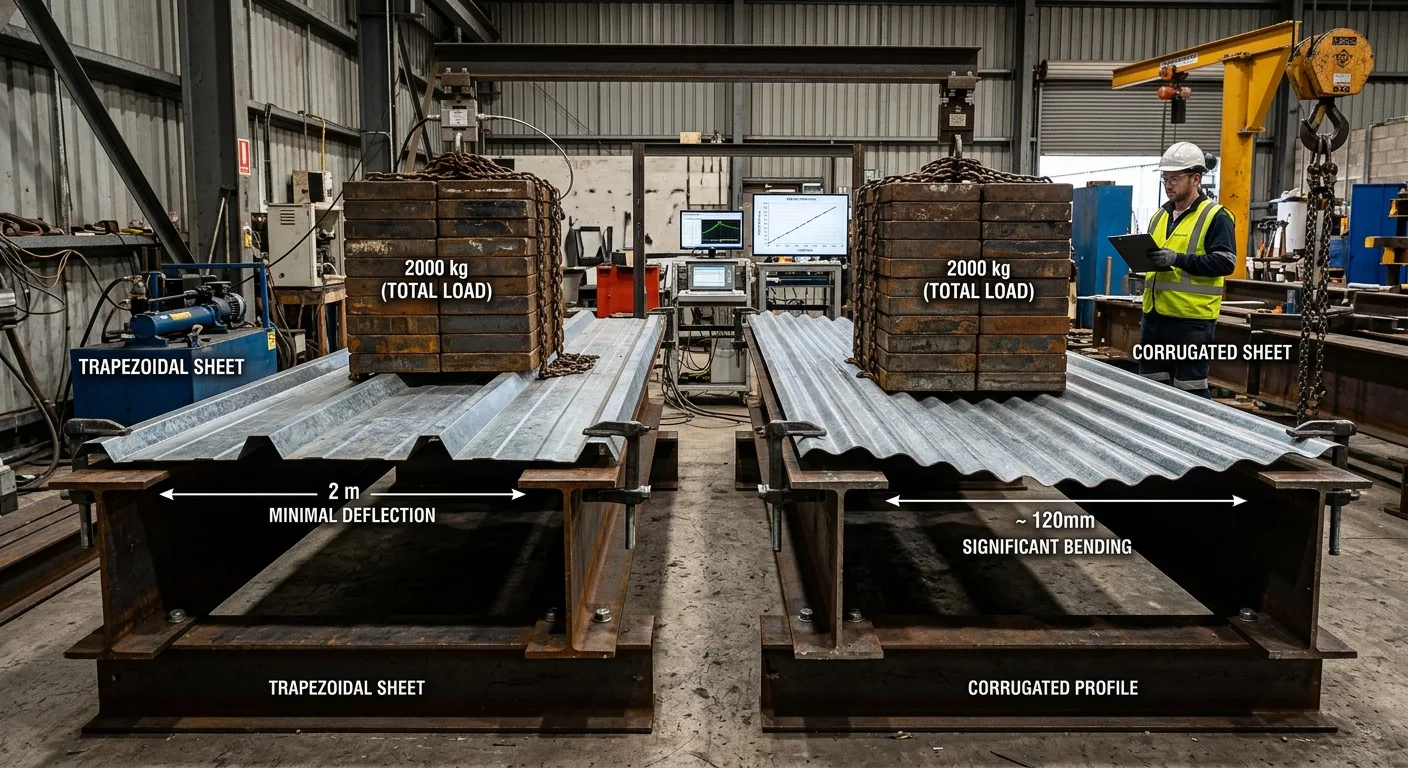
Strength comparison of trapezoidal and corrugated steel roofing sheets
Trapezoidal profiles provide higher load capacity compared to traditional corrugated sheets.

From a structural standpoint, trapezoidal sheets offer the highest strength. Their geometry allows longer spans with fewer supports, making them ideal for industrial buildings and warehouses.

Wave (corrugated) sheets still provide a good strength-to-weight ratio, but they are less rigid. This makes them more suitable for smaller structures or projects where heavy loads are not a concern.

Tile profiles, on the other hand, are not designed for maximum strength. Their value lies in appearance. They deliver a premium look that closely resembles traditional roofing materials.

In simple terms:

  • Trapezoidal = Performance
  • Wave = Balance
  • Tile = Appearance

Choosing the Best Profile for Climate and Structure
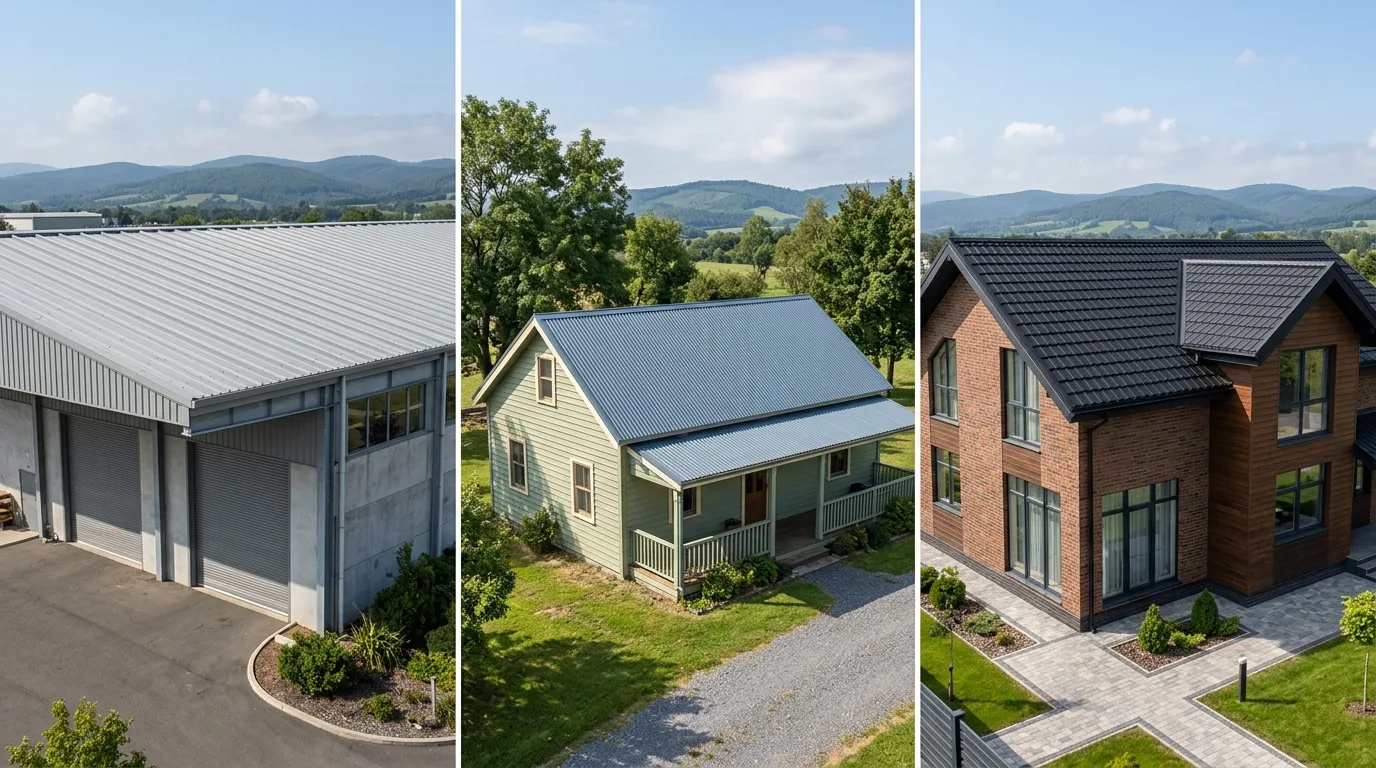
Applications of trapezoidal corrugated and tile roofing sheets on buildings
Different environments and building types require different roofing profiles.

Roof performance is closely tied to climate and structure design.

Trapezoidal profiles perform especially well on low-slope roofs. Their flat channels and vertical ribs help water drain quickly, reducing the risk of leakage.

Wave profiles work best on moderate to steep slopes. They are also more flexible, making them suitable for curved roofs or irregular designs often found in agricultural or rural buildings.

Tile profiles are typically used in residential or architectural projects where visual impact matters more than structural efficiency.

If your project involves coastal, high rainfall, or industrial environments, stronger profiles like trapezoidal combined with proper coating systems are usually the safer choice.

Cost and Installation Considerations for Each Type
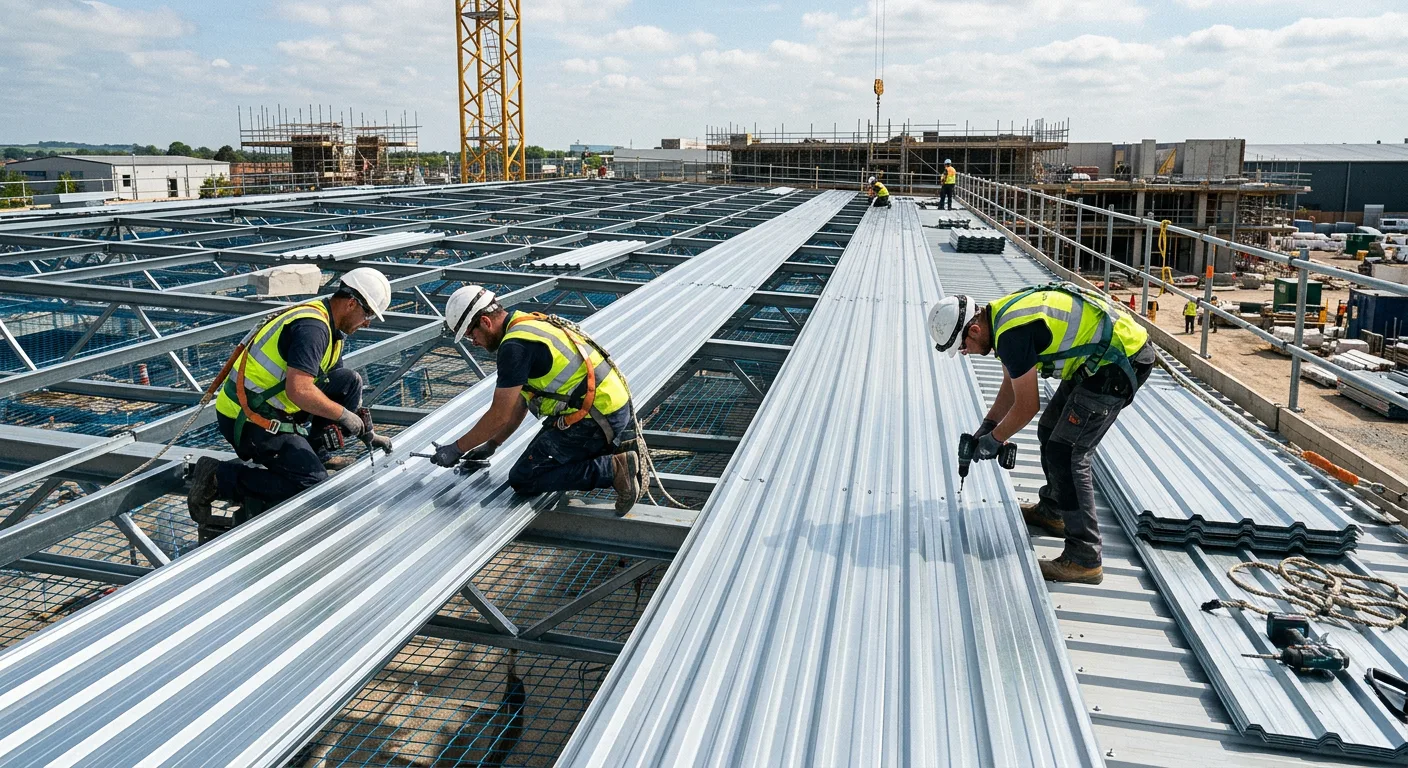
Installation of metal roofing sheets with fasteners on construction site
Installation complexity and cost vary depending on the roofing profile selected.

Cost is not just about the price per ton—it includes installation, maintenance, and long-term performance.

Wave (corrugated) sheets are generally the most economical. They are easy to transport, simple to install, and require less skilled labor. This makes them popular in cost-sensitive markets.

Trapezoidal sheets may have a slightly higher material cost, but they reduce structural requirements and installation time in large-scale projects, often lowering total project cost.

Tile profiles are usually the most expensive option. Their complex shape requires more precise installation and handling, increasing both labor cost and installation time.

Another factor to consider is fastening systems. Both trapezoidal and corrugated sheets typically use exposed fasteners, which require proper sealing and maintenance to prevent leakage over time.

Conclusion

Choosing the right roofing profile is not just a design decision—it directly affects durability, cost, and long-term performance.

Trapezoidal profiles are the best choice for strength and large-span structures. Wave profiles offer flexibility and cost efficiency for simpler applications. Tile profiles deliver premium aesthetics for residential projects.

The key is to match the profile with your project’s actual needs—climate conditions, structural requirements, and budget—rather than simply choosing the cheapest or most common option.

Not Sure Which Roofing Profile Fits Your Market?

We help buyers select the right roofing profile based on project type, climate conditions, and budget targets—ensuring the best balance between cost and performance.

Send us your project details, and we’ll recommend the most suitable profile along with optimized specifications.
Share :

X
Facebook
LinkedIn
Pinterest
WhatsApp

More Tips

Why zinc coating thickness matters for galvanized steel coils

Why Does Zinc Coating Thickness Matter for Long-Lasting Steel Coils?

Zinc coating thickness is one of the most critical factors determining the real service life of galvanized and aluminum-zinc coated steel coils. While many buyers focus on base steel grade or price, coating mass directly influences corrosion resistance, durability, and total lifecycle cost — especially in demanding environments. Understanding Zinc Coating Layers and Symbols (Z, AZ) Zinc coatings are typically specified using symbols such as Z (pure zinc) or AZ (aluminum-zinc alloy). These symbols represent not only the coating type, but also the protective mechanism. Pure zinc provides sacrificial protection, while aluminum-zinc coatings combine barrier protection with sacrificial behavior. Common coating mass designations like Z100, Z180, Z275 or AZ150, AZ185 indicate the total coating weight applied to both sides of the steel sheet and are directly linked to expected corrosion resistance. How Coating Thickness Affects Corrosion Resistance Thicker zinc coatings significantly slow corrosion progression compared to thin coatings. Zinc protects

Read More »
Steel roofing sheets installed on industrial buildings showing strength and durability

How Does Steel Sheet Thickness Impact Roofing Durability and Project Costs?

How Steel Sheet Thickness Impacts Roofing Durability and Project Cost Steel sheet thickness is one of the most influential factors in metal roofing performance. It directly affects structural strength, resistance to environmental loads, service life, and the total cost of a roofing project. Selecting the appropriate thickness is not simply about choosing the thickest material available—it requires balancing durability, structural requirements, installation conditions, and budget constraints. Table of Contents The Role of Steel Sheet Thickness in Roofing Strength How to Choose the Ideal Thickness for Your Project Balancing Cost and Durability Real-World Examples: Thin vs. Thick Steel Roofing Conclusion The Role of Steel Sheet Thickness in Roofing Strength Thicker steel sheets provide greater rigidity and resistance to wind and impact loads. Thicker steel sheets offer higher structural strength, improving resistance to wind uplift, impact loads, and foot traffic during installation and maintenance. Increased thickness reduces the risk of denting and

Read More »
Steel coils stored in factory warehouse ready for pre-shipment surface inspection

How Can Buyers Inspect Steel Coil Surface Quality Before Shipment? What Should a Proper Checklist Include?

How to Inspect Steel Coil Surface Quality Before Shipment: A Buyer’s Checklist Before steel coils are shipped overseas, surface quality inspection plays a critical role in preventing disputes, claims, and downstream processing issues. For buyers, especially importers and distributors, surface defects that go unnoticed before shipment can quickly translate into financial loss, project delays, or customer dissatisfaction. Why Surface Quality Inspection Matters Before Shipping Surface condition is often the first indicator of overall manufacturing quality and process control. Even when mechanical properties meet specification, surface defects such as scratches, dents, coating discontinuities, or corrosion spots can significantly reduce the usable value of a steel coil. Because most surface-related claims arise after unloading or processing, conducting a systematic inspection before shipment helps buyers identify issues early and establish clear quality documentation. Visual inspection under proper lighting helps identify surface defects before coils are packed for export. Key Visual and Dimensional Inspection

Read More »
Alu-zinc coated steel coils stored in warehouse for construction and roofing applications

Why Are More Buyers Choosing Alu-Zinc Coated Steel for Extreme Environments?

Alu-zinc coated steel coils are widely used in roofing and construction due to their excellent corrosion resistance and durability. As construction projects increasingly expand into coastal regions, humid climates, and industrial zones, the demand for more durable building materials continues to grow. Traditional galvanized steel has long been used for roofing and structural applications, but many buyers are now turning to Alu-Zinc coated steel as a more resilient solution. Thanks to its unique coating composition, aluminum-zinc coated steel offers superior corrosion resistance, longer service life, and improved performance under extreme environmental conditions. These advantages make it an increasingly popular choice for roofing, infrastructure, and industrial buildings worldwide. What Is Alu-Zinc Coated Steel and How It’s Made Alu-zinc coated steel, sometimes known as aluminum-zinc alloy coated steel, is produced by applying a metallic coating composed primarily of aluminum and zinc onto a steel substrate through a continuous hot-dip coating process. The

Read More »
Trusted Steel Supplier

Build Stronger with Premium Steel Solutions

Explore our wide range of galvanized, galvalume, and color-coated steel products for your next project.

Get A Quick Price Today