What Are the Essential Tips for Sourcing Steel from China While Ensuring Quality Control and a Reliable Supply?

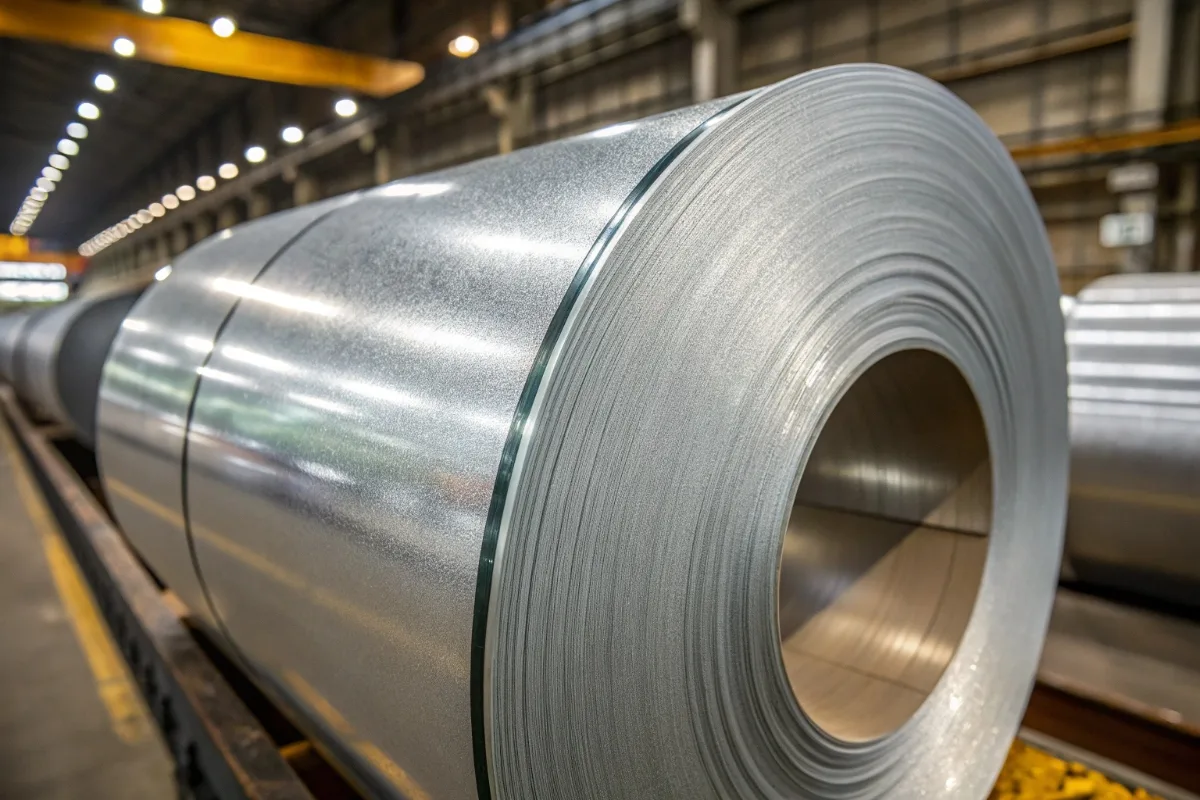
Steel manufacturing factory in China with coil production line
China’s steel industry offers large-scale production capacity and global export capability.

Sourcing steel from China can be highly cost-effective—but for most buyers, the real concern is not price. It’s quality consistency, supplier reliability, and delivery stability.

China has both world-class manufacturers and unreliable suppliers. The difference between a successful order and a costly mistake often comes down to how well you manage supplier selection, quality control, and logistics.

This guide outlines practical steps to help you reduce risk and build a reliable steel supply chain.

Why China Remains a Leading Steel Exporter

China remains a leading global steel exporter due to its complete industrial ecosystem. From raw materials to finished products, the supply chain is highly integrated, allowing competitive pricing and fast production cycles.

Buyers can source a wide range of products, including PPGI, galvanized steel, Alu-zinc steel, and roofing sheets, with flexible customization options such as thickness, coating, and dimensions.

However, this flexibility also introduces risk. Without proper control, inconsistencies in material or coating quality can occur. That’s why selecting the right supplier is critical.

How to Evaluate a Reliable Steel Supplier

Engineer auditing steel factory production line and equipment
Factory audits help verify real production capacity and equipment conditions.

A professional supplier should demonstrate real production capability—not just provide attractive quotations.

  • Verify factory capacity: Request videos, equipment lists, and production data.
  • Check certifications: Ensure compliance with ASTM, EN, or JIS standards and ISO systems.
  • Review export experience: Experienced suppliers handle documentation and logistics more reliably.
  • Build long-term cooperation: Stable partnerships improve consistency and accountability.

At the same time, it is wise to qualify backup suppliers to reduce risk in case of delays or disruptions.

Key Quality Control Steps During Production

Steel quality inspection using caliper measuring thickness
Multi-stage inspection ensures product quality meets specifications.

Quality control should be implemented across the entire production process, not just at the final stage.

Pre-production: Confirm material grade, coating type, thickness, and tolerances.

In-process inspection: Monitor coating thickness, surface quality, and consistency.

Pre-shipment inspection: Verify dimensions, weight, and packaging condition.

It is also important to verify mill test reports (MTRs) against actual products. For critical orders, third-party testing is highly recommended to prevent material substitution or quality discrepancies.

Ensuring On-Time Delivery and After-Sales Support

Steel coils warehouse with inventory management and logistics tracking
Transparent supply chain management improves delivery reliability.

Reliable delivery requires strong coordination across production and logistics.

  • Maintain transparency: Track raw materials, production progress, and shipping schedules.
  • Define contract terms: Include clear specifications, delivery timelines, and penalty clauses.
  • Monitor packaging: Ensure anti-corrosion protection and secure loading.
Steel coils loading into container with secure packaging for export
Proper packaging and loading prevent damage during international transportation.

After-sales support is equally important. A reliable supplier should respond quickly to issues and provide solutions, ensuring long-term cooperation.

Conclusion

Sourcing steel from China is not just about finding the lowest price—it’s about building a controlled and reliable supply system.

By combining supplier verification, multi-stage quality control, and proper logistics planning, buyers can significantly reduce risk and ensure consistent product quality across shipments.

Over time, stable supplier relationships and structured sourcing strategies lead to better performance, fewer issues, and stronger profitability.

Worried About Quality Risks When Sourcing from China?

We help international buyers reduce sourcing risks through verified production, strict quality control, and transparent supply chain management.

  • ✔ Factory verification and audit support
  • ✔ Full inspection process (before, during, after production)
  • ✔ Accurate MTC verification and batch tracking
  • ✔ Secure packaging and container loading solutions
  • ✔ Backup production planning for stable supply

Send us your requirements, and we’ll help you build a safer and more reliable steel sourcing strategy.

Share :

X
Facebook
LinkedIn
Pinterest
WhatsApp

More Tips

What Is the Global Demand Outlook for Steel Sheets and Roofing Products in 2025 and Beyond?

Global Demand Outlook for Steel Sheets and Roofing Products: 2025 and Beyond Claim: Although overall steel demand looks broadly flat in 2025, the outlook for flat steel (sheets & coils) and roofing products shows pockets of stronger growth — especially in emerging markets and in niche applications where metal roofing’s durability and low maintenance are valued. Global steel demand trends through 2025 and beyond — stable volume, regional divergence. Table of Contents 1. Current Market Trends in Global Steel Sheet Consumption 2. Regional Insights: Asia-Pacific, Middle East, and Europe Demand Drivers 3. How Infrastructure Growth Shapes the Roofing Steel Market 4. Forecast 2025–2030: Emerging Opportunities for Exporters Conclusion 1. Current Market Trends in Global Steel Sheet Consumption After several years of volatility, global steel demand is expected to be essentially flat in 2025 — roughly in the range of 1.74–1.75 billion tonnes — with a modest rebound forecast for 2026.

Read More »
Comparison image of galvanized and galvalume steel coils under daylight showing coating texture differences.

Galvanized vs. Galvalume Steel Coils: Which Is Better for Roofing Projects?

Galvanized vs. Galvalume Steel Coils: Which Is Better for Roofing Projects? Claim: While both galvanized and galvalume steel coils are widely used for roofing, Galvalume generally provides longer service life and better performance in harsh or humid environments, whereas Galvanized steel remains a practical, budget-friendly choice for moderate climates and shorter-term projects. Galvanized (zinc-coated) and Galvalume (aluminum-zinc alloy coated) steel coils side by side — two leading materials for roofing applications. Table of Contents 1. What Are Galvanized and Galvalume Steel Coils? 2. Key Differences in Composition and Performance 3. Advantages and Disadvantages for Roofing Applications 4. How to Choose the Right Coil for Your Climate and Budget Conclusion 1. What Are Galvanized and Galvalume Steel Coils? Both galvanized and galvalume steel coils start as carbon steel sheet that is coated to improve corrosion resistance. The coating is the key difference: Galvanized steel is coated primarily with zinc to provide

Read More »
Diagram comparing ASTM, EN, and JIS steel coil standards

What Are the Top 5 International Quality Standards Every Steel Coil Exporter Should Follow?

Top 5 International Quality Standards Every Steel Coil Exporter Should Follow Claim To compete in the global steel market, exporters must ensure that every steel coil meets internationally recognized standards such as ASTM, EN, JIS, ISO, and SGS Certification. These standards not only define product quality but also build credibility and trust with overseas buyers. Table of Contents Understanding Global Steel Coil Standards (ASTM, EN, JIS) Why Certification Matters for International Trade Common Testing Methods for Steel Coil Quality How to Ensure Compliance and Build Buyer Trust Conclusion Understanding Global Steel Coil Standards (ASTM, EN, JIS) Global buyers expect steel coils that meet unified performance benchmarks. The three most widely used international standards include: ASTM (American Society for Testing and Materials): Sets technical standards for chemical composition, tensile strength, yield, and coating thickness—essential for buyers in the US and Latin America. EN (European Norm): Defines structural and surface requirements for

Read More »

What Is the Difference Between PPGI and PPGL?

Table of Contents Performance Comparison: Durability, Color, and Corrosion Resistance Best Applications for Each Coil Type How to Choose the Right Product for Your Target Market PPGI and PPGL are two widely used pre-painted steel coil types in international construction, roofing, and manufacturing sectors. Although both belong to the “pre-painted steel” category, the coating composition and performance differ significantly, leading to different applications and market suitability. Performance Comparison: Durability, Color, and Corrosion Resistance    Technical comparison of PPGI vs PPGL coating layers. The primary difference between PPGI and PPGL lies in the metallic coating applied before the painting layer. PPGI uses pure zinc coating, while PPGL applies a special aluminium-zinc alloy. This alloy dramatically enhances corrosion resistance and heat reflectivity, making PPGL more durable in harsh outdoor environments. Best Applications for Each Coil Type Environmental comparison: PPGI for mild climates, PPGL for coastal/high humidity regions. PPGI is widely used where

Read More »
Trusted Steel Supplier

Build Stronger with Premium Steel Solutions

Explore our wide range of galvanized, galvalume, and color-coated steel products for your next project.

Get A Quick Price Today