
How Do You Calculate Steel Coil Weight and Optimize Container Loading Efficiency?

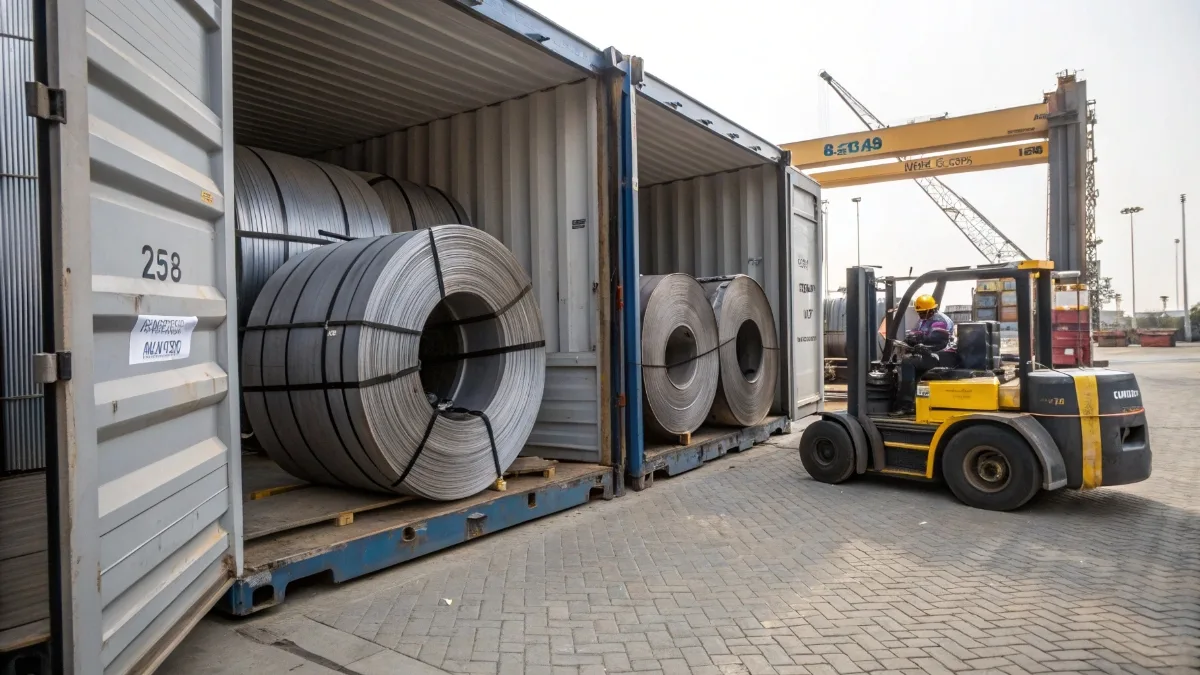
Efficient container loading is critical for reducing freight cost and maximizing shipping value.

When sourcing steel coils for export, two questions always come up: how much does each coil weigh, and how can containers be loaded more efficiently? These are not just technical details—they directly impact your purchase cost, freight expenses, and overall profitability.

By understanding weight calculation and container loading strategies, buyers can avoid wasted capacity, reduce logistics costs, and make smarter purchasing decisions.

Basic Formula for Calculating Steel Coil Weight

Steel coil weight is calculated based on three main factors: thickness, width, and length. The standard formula is:

Weight (kg) = Thickness (mm) × Width (mm) × Length (m) × 7.85 ÷ 1000

In international trade, a simplified formula is commonly used:

Weight (tons) = Thickness × Width × 7.85 × Length ÷ 1,000,000
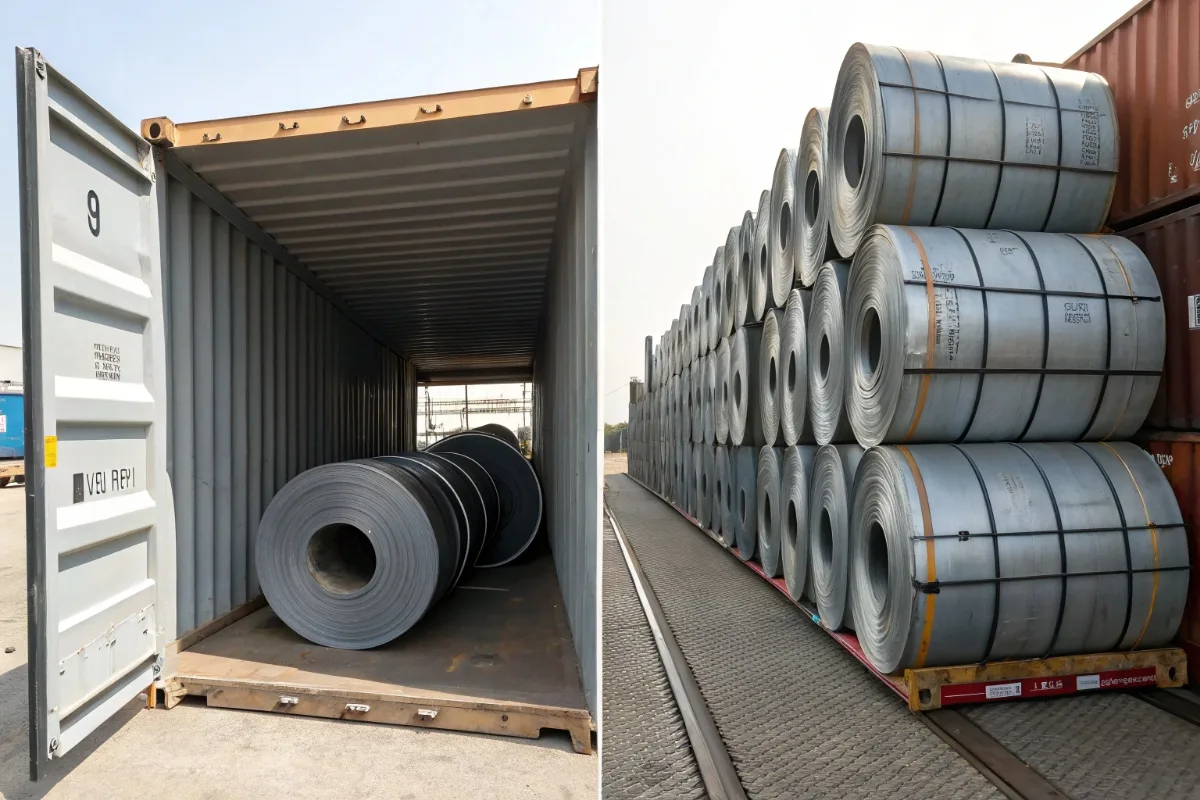
Thickness, width, and length are the key variables used to calculate steel coil weight.

The constant 7.85 represents the density of steel. In practice, buyers often rely on supplier data such as outer diameter (OD) and inner diameter (ID) to estimate coil length and verify weight.

Accurate weight calculation helps buyers verify quotations, avoid discrepancies, and ensure compliance with contract specifications.

Factors That Influence Loading Efficiency

Once weight is understood, the next step is optimizing how coils are loaded into containers. The primary limitation is container payload capacity.

A standard 20GP container typically carries around 25–28 tons, depending on local regulations and shipping conditions. Poor planning can result in unused capacity or unnecessary freight costs.

In addition to weight, coil dimensions such as outer diameter, inner diameter, and width affect how many coils can physically fit into a container.

Optimized loading minimizes empty space and reduces freight cost per ton.

How to Plan Container Loading for Cost Savings

Efficient loading starts with matching coil weight to container limits. For example, instead of loading three 8-ton coils (24 tons total), it may be more efficient to load two coils of 12–13 tons each, reaching closer to the maximum allowed weight.

Another effective strategy is mixing heavy and light coils to fine-tune total weight. This approach helps maximize payload without exceeding limits.

Loading method also plays an important role:

  • Eye-to-side: More stable and widely used
  • Eye-to-sky: Can improve space utilization in certain cases
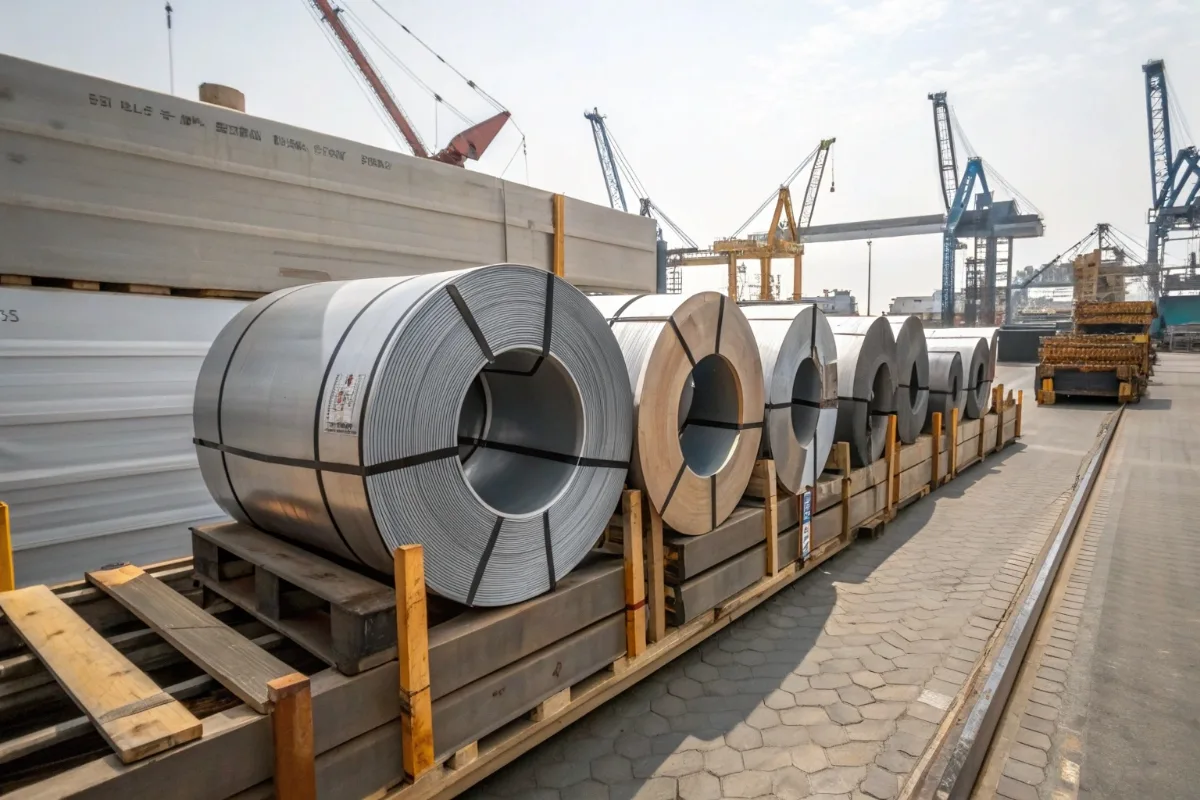
Different loading orientations affect both safety and space efficiency during transport.

Advanced buyers often pre-plan loading arrangements and coordinate with suppliers to customize coil weight, ensuring each container is fully optimized before shipment.

Tools and Software for Accurate Weight Estimation

To improve accuracy and efficiency, many buyers use digital tools such as Excel calculators or online steel weight estimation tools. These tools allow quick calculation of coil weight and help simulate different loading combinations.

Pre-planned loading layouts help improve efficiency and reduce logistics costs.

For larger operations, integrating these calculations into procurement or logistics systems can further improve consistency and reduce manual errors.

Conclusion

Steel coil weight calculation and container loading optimization are essential for efficient international trade. By understanding the relationship between coil specifications and container capacity, buyers can reduce waste, control costs, and improve overall logistics performance.

Even small improvements in each shipment can lead to significant savings over time, especially for businesses handling large volumes of steel products.

Want to Reduce Your Shipping Cost per Ton?

We help global buyers optimize steel coil orders by calculating accurate weights, customizing coil sizes, and planning container loading for maximum efficiency.

If you’re looking to reduce freight costs and improve loading performance, contact us for a customized loading plan based on your project requirements.

Share :

X
Facebook
LinkedIn
Pinterest
WhatsApp

More Tips

How to Identify High-Quality Galvanized Steel Coils Before You Buy?

A modern steel factory showcasing neatly stacked galvanized steel coils ready for export. Galvanized steel coils are the backbone of countless industries — from roofing and construction to automotive manufacturing. But not all galvanized coils are made equal. A small difference in coating weight, substrate quality, or surface finish can significantly affect long-term performance and your customers’ satisfaction. In this article, we’ll break down what truly defines high-quality galvanized steel coils, how to verify them before purchase, and what practical steps buyers can take to avoid costly surprises. 1. Understanding the Core Quality Factors of Galvanized Steel Coils Close-up of galvanized steel surface showing the natural zinc spangle texture. At the heart of every reliable galvanized coil lies a combination of substrate quality, zinc coating, and surface treatment. The substrate (the base steel) determines the coil’s strength and formability. Grades such as DX51D, SGCC, and SGCH are widely recognized in

Read More »
Modern steel factory with Aluzinc steel coils stacked in warehouse.

Why Aluzinc (GL) Coils Are Gaining Popularity in Construction and Roofing?

Why Aluzinc (GL) Coils Are Gaining Popularity in Construction and Roofing Aluzinc (GL) steel coils stored in a modern factory, ready for export. In recent years, Aluzinc (GL) steel coils have become one of the most preferred materials for roofing, wall cladding, and industrial construction. Their growing popularity is not just a trend—it’s a reflection of real performance advantages over traditional galvanized steel. This article explores why more global buyers, engineers, and project contractors are switching to Aluzinc, and what makes it the smarter long-term investment for modern construction. Table of Contents 1. What Makes Aluzinc (GL) Steel Coils Different from Galvanized Coils 2. Advantages of Aluzinc Coatings in Harsh Environments 3. Applications in Modern Roofing and Structural Projects 4. Market Insights: Why Global Buyers Are Switching to GL Coils Claim Final Thoughts 1. What Makes Aluzinc (GL) Steel Coils Different from Galvanized Coils Comparison between galvanized (zinc-coated) and Aluzinc

Read More »

How Do You Choose the Right Finish for Color-Coated Steel Coils to Ensure Long-Term Performance?

How Do You Choose the Right Finish for Color-Coated Steel Coils to Ensure Long-Term Performance? Color-coated steel coils (also known as PPGI and PPGL) are widely used in construction, appliances, and industrial manufacturing. Choosing the right coating finish is crucial to ensure long-term durability, appearance, and protection against harsh environmental conditions. This guide explains how to choose the right finish to achieve long-lasting performance. Table of Contents 1. Introduction to Color-Coated (PPGI/PPGL) Steel Coils and Their Uses 2. Comparing Coating Systems: Polyester, SMP, PVDF, and More 3. Key Factors to Evaluate Before Selecting a Color Coating 4. How Proper Maintenance Extends the Lifespan of Color-Coated Coils 1. Introduction to Color-Coated (PPGI/PPGL) Steel Coils and Their Uses Color-coated steel coils are pre-painted galvanized (PPGI) or galvalume (PPGL) steel sheets that combine aesthetics with corrosion protection. They are widely applied in roofing systems, wall panels, home appliances, and decorative construction materials. These

Read More »
Panoramic view of steel coils and logistics trucks representing the roofing steel supply chain from mill to roof.

How does the supply chain of roofing steel sheets work, from mill to roof?

From Mill to Roof: Understanding the Roofing Steel Supply Chain Claim: The roofing steel sheet supply chain is a story of transformation — from raw material to a finished product protecting homes and buildings. Understanding how each step connects helps buyers, distributors, and contractors ensure quality, reliability, and timely delivery. Table of Contents 1. How Steel Sheets Are Produced from Raw Material to Finished Coil 2. Logistics and Quality Control in Steel Sheet Exportation 3. Common Challenges in the Roofing Steel Supply Chain 4. Building Reliable Partnerships Between Mills, Traders, and End Users A panoramic view of the roofing steel supply chain — from mill to logistics. 1. How Steel Sheets Are Produced from Raw Material to Finished Coil Hot rolled coils being processed in a modern steel mill. Every roofing sheet begins its journey deep inside a steel mill. Iron ore, scrap steel, zinc, and aluminum are melted and

Read More »
Trusted Steel Supplier

Build Stronger with Premium Steel Solutions

Explore our wide range of galvanized, galvalume, and color-coated steel products for your next project.

Get A Quick Price Today