
What Are the Best Practices for Packaging and Shipping Steel Coils Safely for Exporters and Importers?

Packaging and Shipping Steel Coils Safely: Tips for Exporters and Importers

Claim: Proper packaging, handling, and loading procedures are essential to protect steel coils from rust, deformation, and transport damage — ensuring product quality, regulatory compliance, and cost efficiency from mill to destination.

Table of Contents

Steel coils wrapped and secured on pallets in a warehouse, ready for export shipment.
Properly packaged steel coils with protective wrapping and labeling for safe export.

1. Common Packaging Methods for Export-Ready Steel Coils

Export packaging for steel coils begins with corrosion prevention and impact protection. The inner layer typically uses corrosion-inhibiting paper or VCI film, followed by waterproof kraft paper or plastic wrapping. Outer layers include steel or PET strapping, edge guards, and sometimes metal or wooden crating for heavy-duty shipments. Coils are often mounted on fumigated wooden pallets or steel cradles to ensure stability and easy handling with forklifts or cranes.
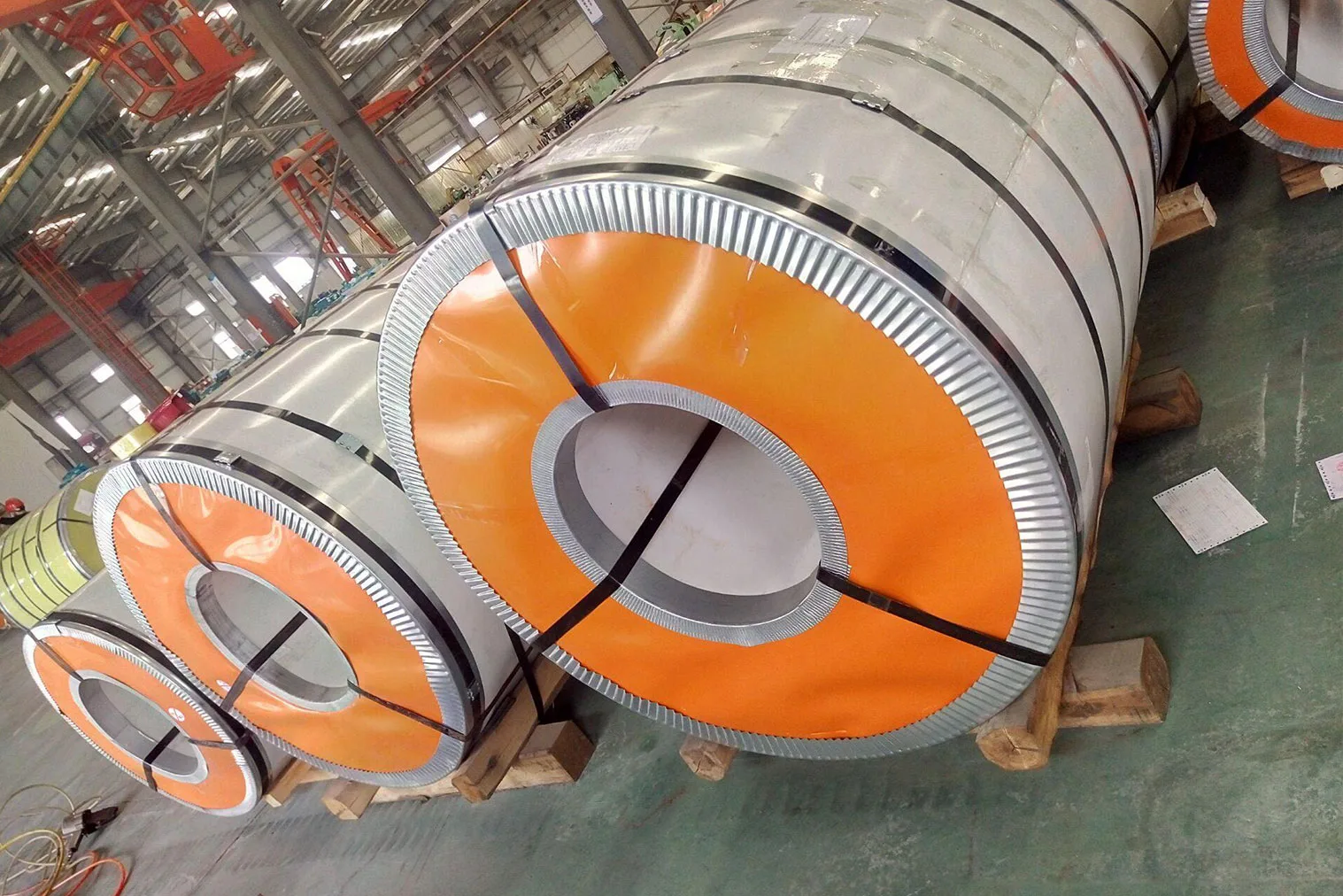
Close-up of multi-layer protective wrapping and strapping used in export steel coil packaging.
Multi-layer coil packaging protects the surface from moisture, impact, and handling stress.

2. How to Prevent Rust, Denting, and Edge Damage During Transport

Moisture and impact are the two biggest threats during transportation. Exporters can minimize rust by using anti-corrosion films, sealing wrap joints tightly, and storing coils in dry, ventilated areas before shipment. For physical protection, edge protectors and reinforced strapping prevent flattening or deformation. During loading, using soft slings, coil tongs, or C-hooks with padding ensures the coil surface remains undamaged.
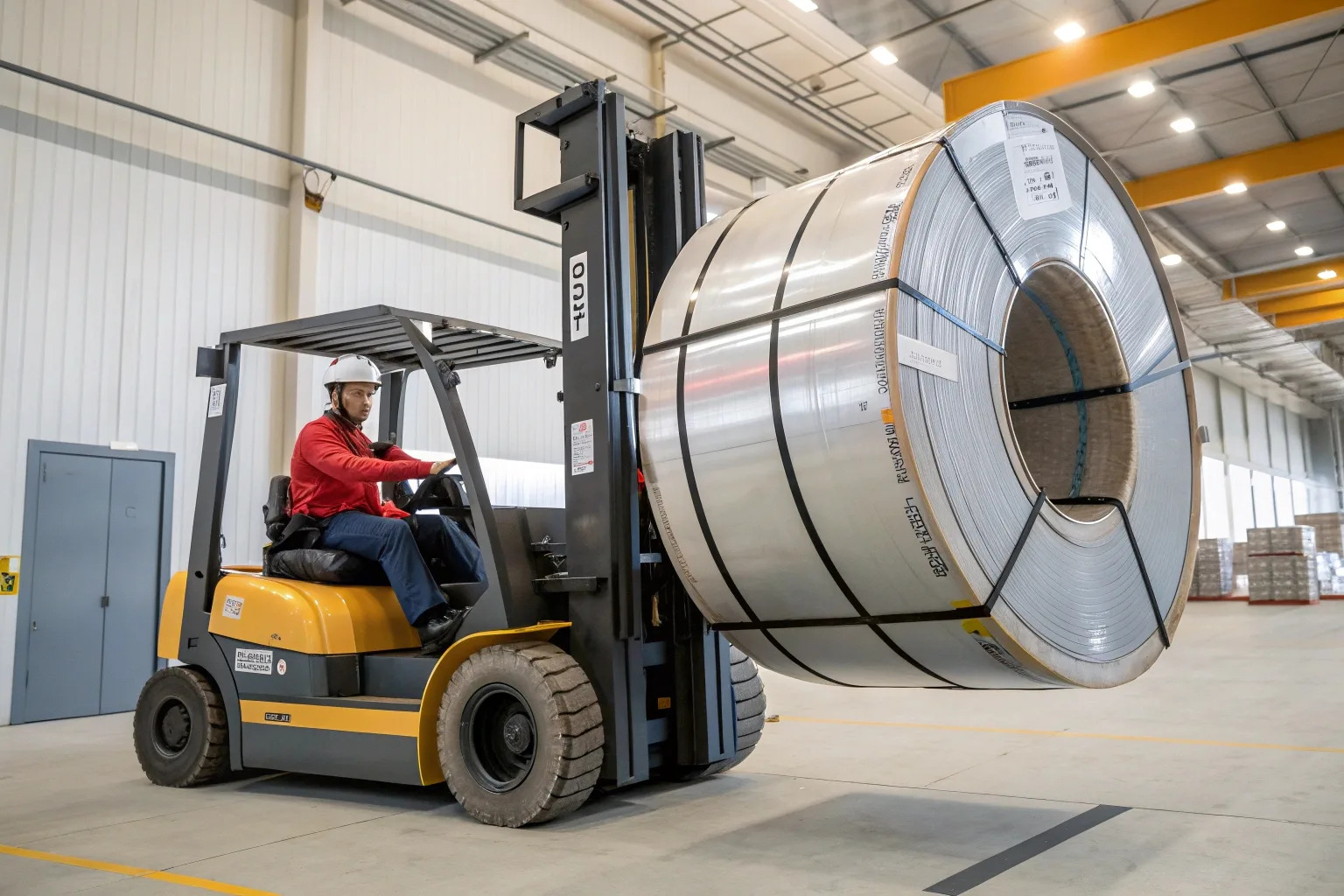
Forklift operator handling a packaged steel coil with padded forks and edge protectors to prevent damage.
Edge protectors and padded lifting tools help prevent denting and surface marks during loading.

3. Essential Safety Standards for Loading and Containerization

Heavy steel coils must be properly blocked and braced to prevent movement during transport. Exporters should follow the CTU Code (Code of Practice for Packing of Cargo Transport Units), which provides international guidelines for securing heavy cargo. Coils can be loaded “eye-to-sky” or “eye-horizontal,” depending on the container and transport mode. Blocking, bracing, and chocking are essential to absorb motion and avoid shifting that could cause structural damage to the container or the cargo itself.
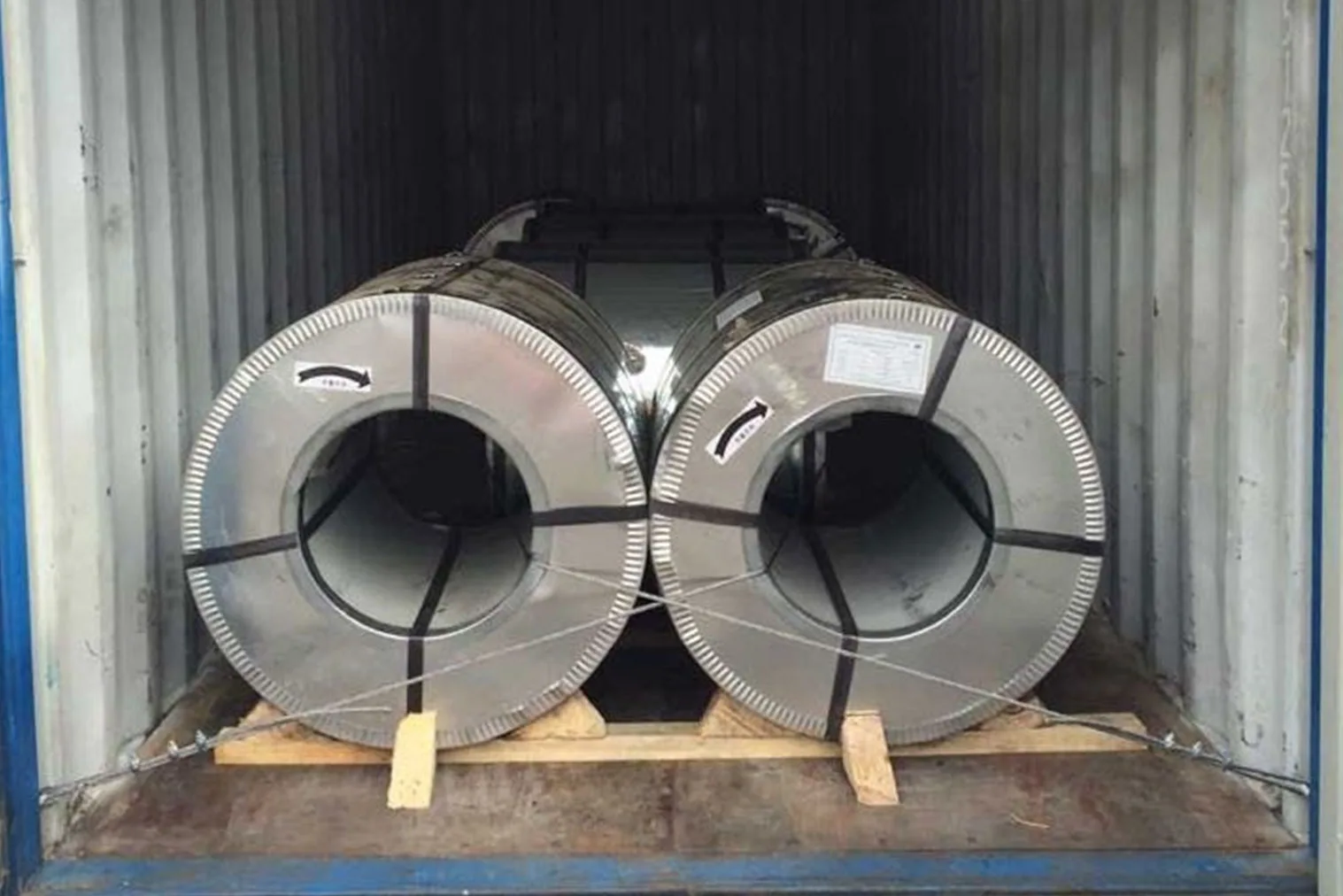
Steel coils secured with wooden blocking and bracing inside a shipping container for safe transport.
Proper blocking and bracing prevent movement and maintain load stability during sea transport.

4. Inspection and Handling Tips for Importers Upon Arrival

Once coils reach their destination, importers should inspect the packaging for any signs of rust, deformation, or water ingress. Minor surface moisture should be dried immediately, while damaged wraps or straps should be documented for claims. Coils must be lifted using rated equipment — never rolled or dragged — and stored on dry, level platforms with adequate spacing for air circulation. Good handling practices at this stage prevent further damage and maintain product quality through the final stage of processing.
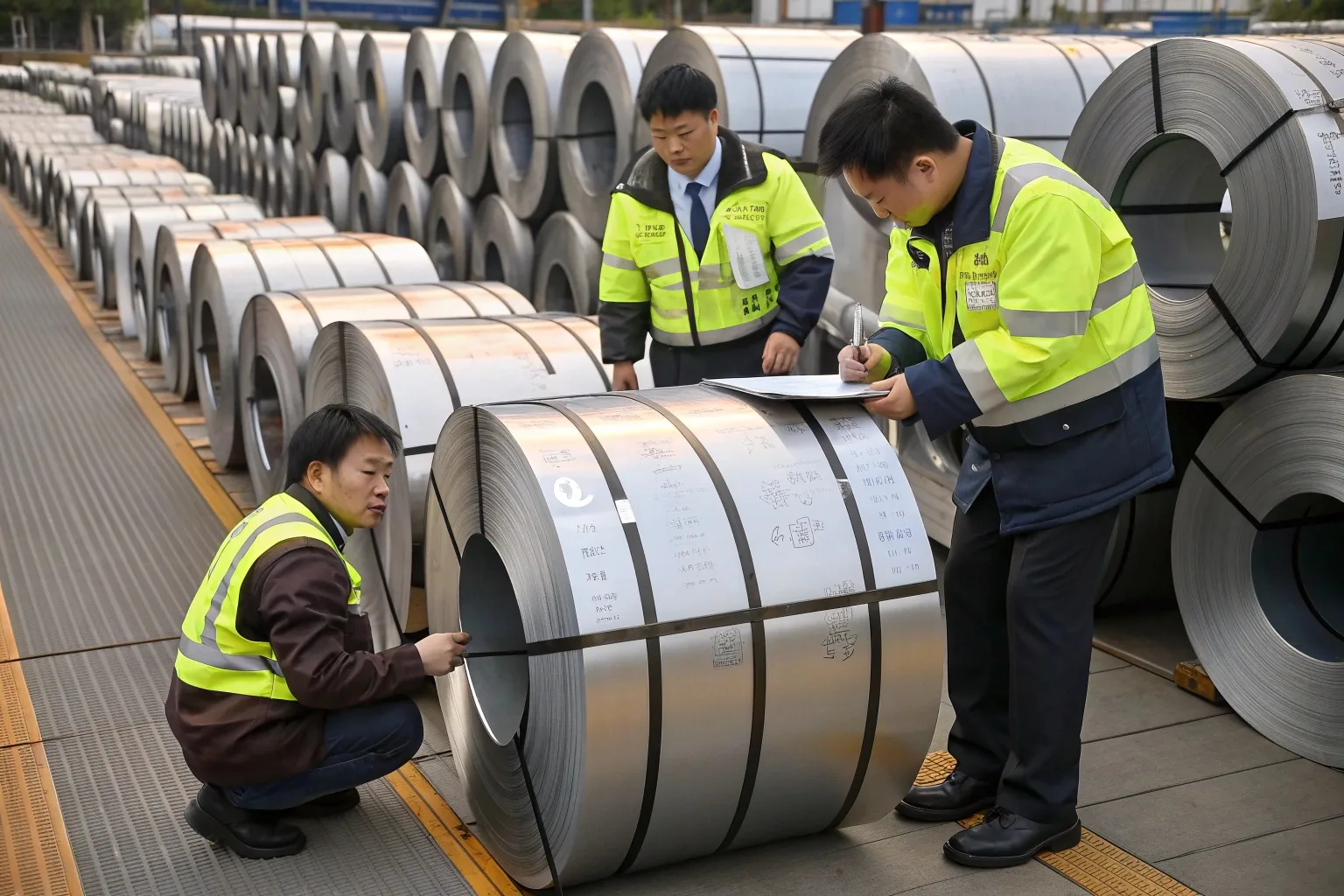
Warehouse staff inspecting incoming steel coils for signs of rust or transport damage.
Inspection upon arrival helps identify any transport-related issues before unpacking or processing.

5. Conclusion

Exporting and importing steel coils safely depends on attention to detail at every stage — from inner corrosion protection and secure strapping to proper blocking, labeling, and inspection. By adopting industry best practices and following international loading standards, both exporters and importers can avoid costly damage, ensure compliance, and maintain the high-quality condition that end users expect. Safe transport isn’t just a logistics task — it’s a key part of protecting your brand reputation and customer trust.

Share :

X
Facebook
LinkedIn
Pinterest
WhatsApp

More Tips

How Can Zinc and Aluminum-Zinc Coatings Maximize Corrosion Resistance in Steel?

Maximizing Corrosion Resistance: A Deep Dive into Zinc and Aluminum-Zinc Coatings Claim: Zinc and aluminum-zinc coatings don’t just cover steel — they extend its life. With the right coating type, thickness, and detailing, you can dramatically reduce corrosion risk and lower lifetime costs. Table of Contents 1. Why Corrosion Protection Is Critical in Steel Applications 2. The Science Behind Zinc vs. Alu-Zinc Coating Systems 3. Real-World Performance: How Coating Thickness Affects Durability 4. Choosing the Right Coating Type for Your Climate and Budget Conclusion Main comparison: zinc-coated (galvanized) vs aluminum-zinc (Aluzinc) coated steel coils. 1. Why Corrosion Protection Is Critical in Steel Applications Think of steel as the backbone of a building or structure — but left unprotected, it will rust, weaken, and fail. Corrosion is often invisible at first, but over months and years it eats away at strength, increases maintenance costs, and shortens warranties. Protective metallic coatings (like

Read More »
Custom steel coil production line showing precision rolling and variable coil thickness.

How do custom thickness and width in steel coils help cut costs for buyers?

How Do Custom Thickness and Width in Steel Coils Help Cut Costs for Buyers? Claim: Customizing the thickness and width of steel coils allows buyers to optimize material usage, reduce waste, and achieve measurable cost savings throughout the production and logistics process. Table of Contents 1. Why Coil Thickness and Width Matter in Industrial Projects 2. How Customized Specifications Improve Material Utilization 3. Cost Optimization Through Precision Rolling and Cutting 4. Partnering with Suppliers for Made-to-Order Steel Coil Solutions 5. Conclusion Precision control in coil rolling helps optimize thickness and reduce waste. 1. Why Coil Thickness and Width Matter in Industrial Projects In any steel fabrication or construction project, choosing the right coil dimensions is crucial. Standard coil sizes often lead to unnecessary cutting, trimming, and leftover materials that end up as scrap. Customizing the coil thickness and width allows buyers to match the material exactly to their production requirements,

Read More »
Stacked steel sheets in a modern factory meeting international ASTM, EN, and JIS standards.

How can steel sheets meet international standards like ASTM, EN, and JIS?

Meeting International Standards for Steel Sheets: ASTM, EN, JIS at a Glance Claim: Compliance with ASTM, EN and JIS standards is not just paperwork — it’s a practical way to guarantee material performance, speed up acceptance in export markets, and build trust between suppliers and buyers. Table of Contents Introduction 1. Understanding the Importance of Global Steel Standards 2. Overview of ASTM, EN, and JIS Classifications for Steel Sheets 3. How to Match Your Order Specifications with the Correct Standard 4. Why Compliance Improves Buyer Confidence and Export Value Conclusion Steel sheets ready for export — meeting international standards ensures acceptance and reliability. Introduction In today’s global steel market, buyers and suppliers operate across borders and standards. ASTM (United States), EN (Europe) and JIS (Japan) are three widely recognized systems that define how steel should be made, tested and documented. Meeting these standards helps ensure material safety, interchangeability and predictable

Read More »

What Is the Global Demand Outlook for Steel Sheets and Roofing Products in 2025 and Beyond?

Global Demand Outlook for Steel Sheets and Roofing Products: 2025 and Beyond Claim: Although overall steel demand looks broadly flat in 2025, the outlook for flat steel (sheets & coils) and roofing products shows pockets of stronger growth — especially in emerging markets and in niche applications where metal roofing’s durability and low maintenance are valued. Global steel demand trends through 2025 and beyond — stable volume, regional divergence. Table of Contents 1. Current Market Trends in Global Steel Sheet Consumption 2. Regional Insights: Asia-Pacific, Middle East, and Europe Demand Drivers 3. How Infrastructure Growth Shapes the Roofing Steel Market 4. Forecast 2025–2030: Emerging Opportunities for Exporters Conclusion 1. Current Market Trends in Global Steel Sheet Consumption After several years of volatility, global steel demand is expected to be essentially flat in 2025 — roughly in the range of 1.74–1.75 billion tonnes — with a modest rebound forecast for 2026.

Read More »
Trusted Steel Supplier

Build Stronger with Premium Steel Solutions

Explore our wide range of galvanized, galvalume, and color-coated steel products for your next project.

Get A Quick Price Today