What Are the Best Practices for Packaging and Shipping Steel Coils Safely for Exporters and Importers?

Packaging and Shipping Steel Coils Safely: Tips for Exporters and Importers

Claim: Proper packaging, handling, and loading procedures are essential to protect steel coils from rust, deformation, and transport damage — ensuring product quality, regulatory compliance, and cost efficiency from mill to destination.

Table of Contents

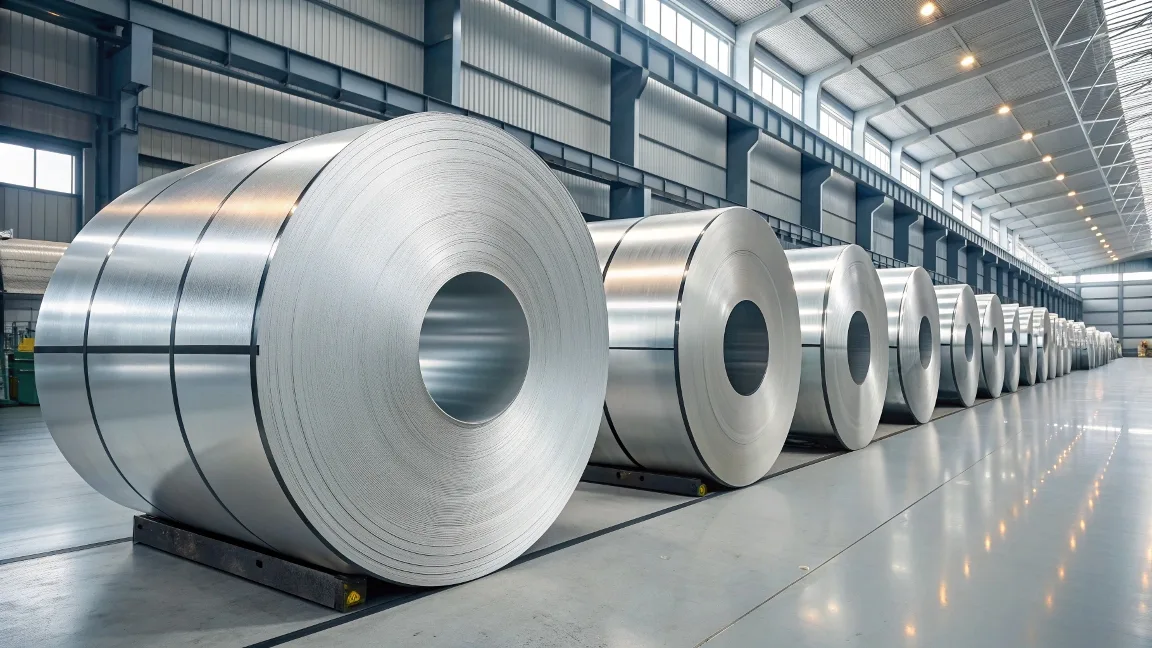
Steel coils wrapped and secured on pallets in a warehouse, ready for export shipment.
Properly packaged steel coils with protective wrapping and labeling for safe export.

1. Common Packaging Methods for Export-Ready Steel Coils

Export packaging for steel coils begins with corrosion prevention and impact protection. The inner layer typically uses corrosion-inhibiting paper or VCI film, followed by waterproof kraft paper or plastic wrapping. Outer layers include steel or PET strapping, edge guards, and sometimes metal or wooden crating for heavy-duty shipments. Coils are often mounted on fumigated wooden pallets or steel cradles to ensure stability and easy handling with forklifts or cranes.
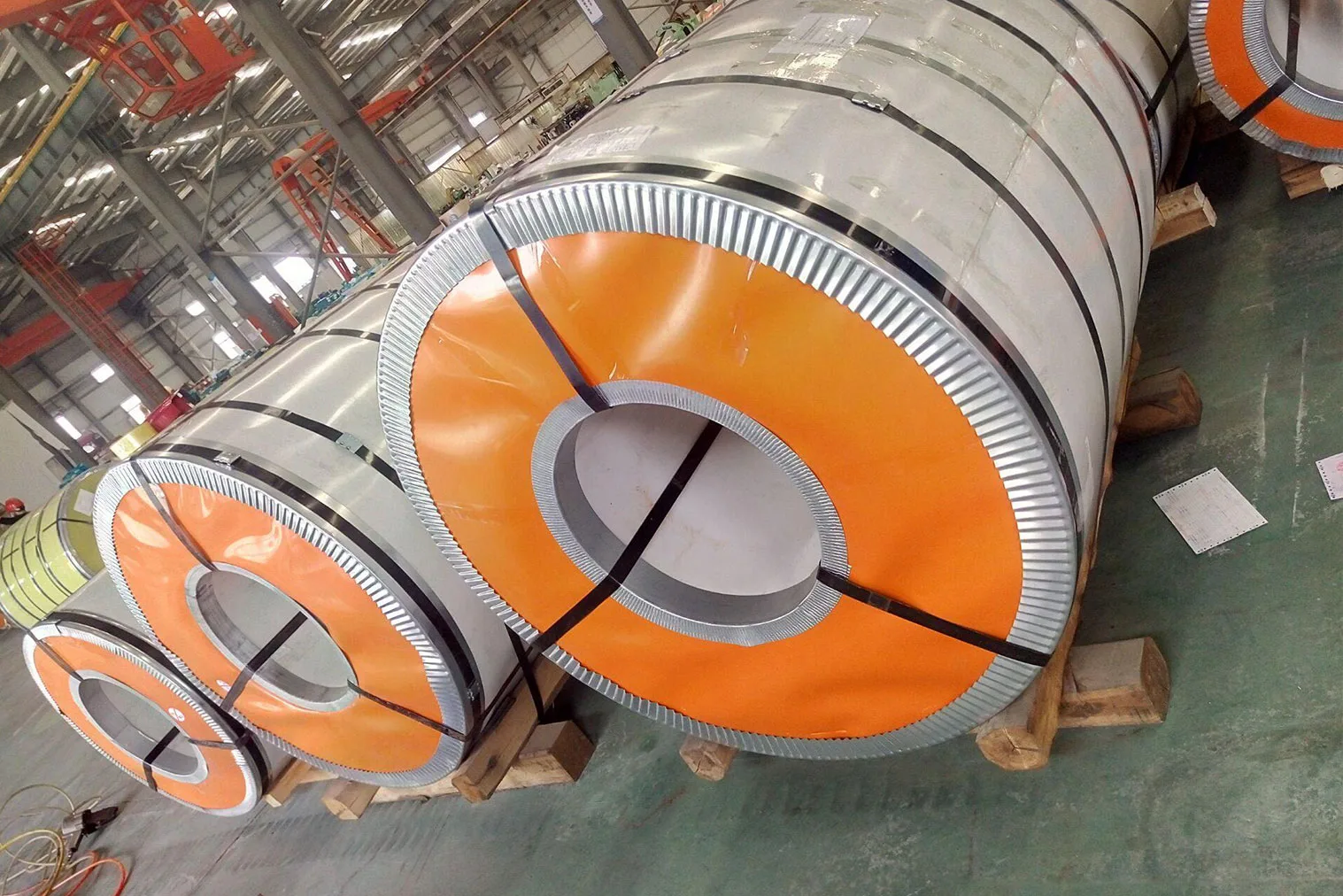
Close-up of multi-layer protective wrapping and strapping used in export steel coil packaging.
Multi-layer coil packaging protects the surface from moisture, impact, and handling stress.

2. How to Prevent Rust, Denting, and Edge Damage During Transport

Moisture and impact are the two biggest threats during transportation. Exporters can minimize rust by using anti-corrosion films, sealing wrap joints tightly, and storing coils in dry, ventilated areas before shipment. For physical protection, edge protectors and reinforced strapping prevent flattening or deformation. During loading, using soft slings, coil tongs, or C-hooks with padding ensures the coil surface remains undamaged.
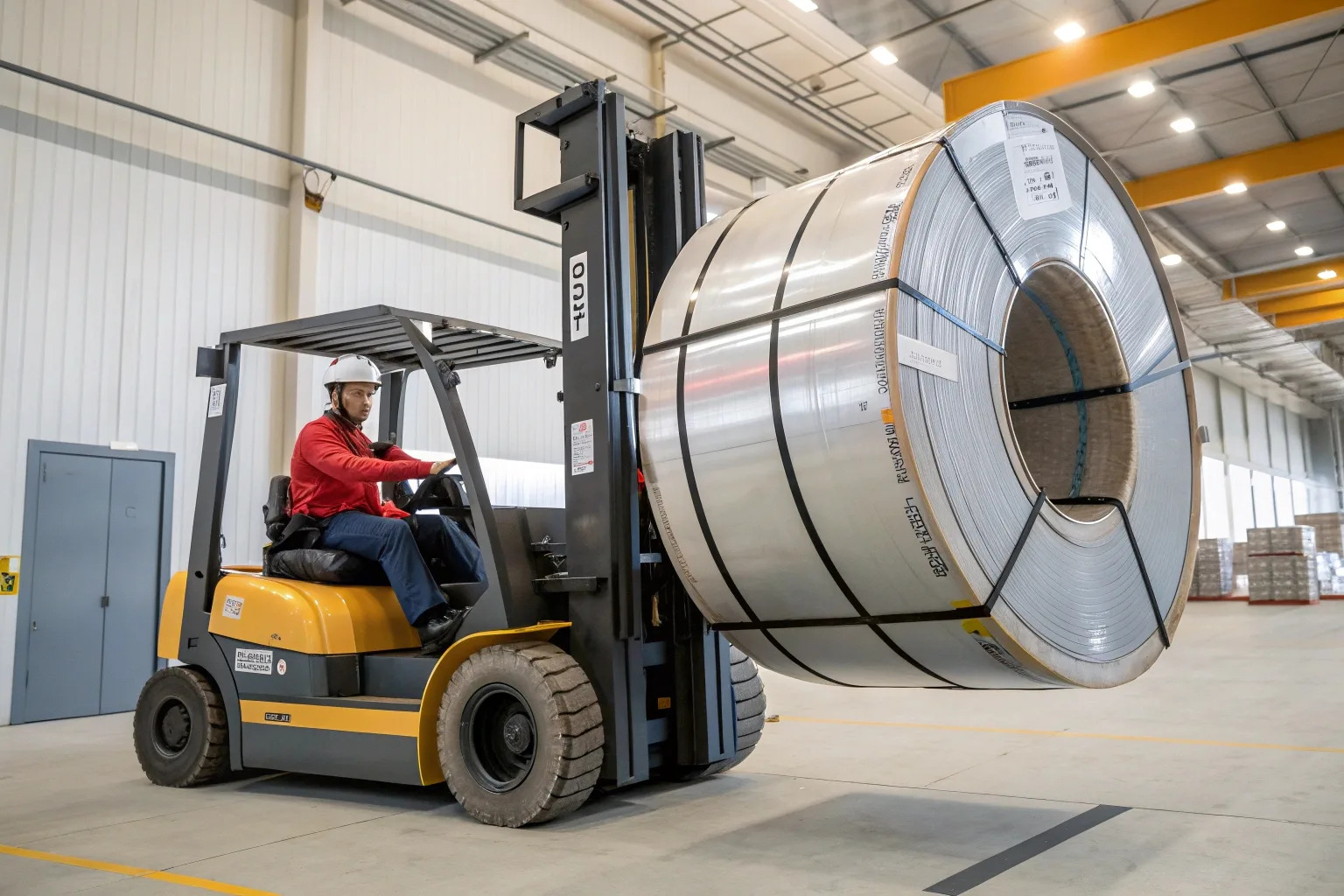
Forklift operator handling a packaged steel coil with padded forks and edge protectors to prevent damage.
Edge protectors and padded lifting tools help prevent denting and surface marks during loading.

3. Essential Safety Standards for Loading and Containerization

Heavy steel coils must be properly blocked and braced to prevent movement during transport. Exporters should follow the CTU Code (Code of Practice for Packing of Cargo Transport Units), which provides international guidelines for securing heavy cargo. Coils can be loaded “eye-to-sky” or “eye-horizontal,” depending on the container and transport mode. Blocking, bracing, and chocking are essential to absorb motion and avoid shifting that could cause structural damage to the container or the cargo itself.
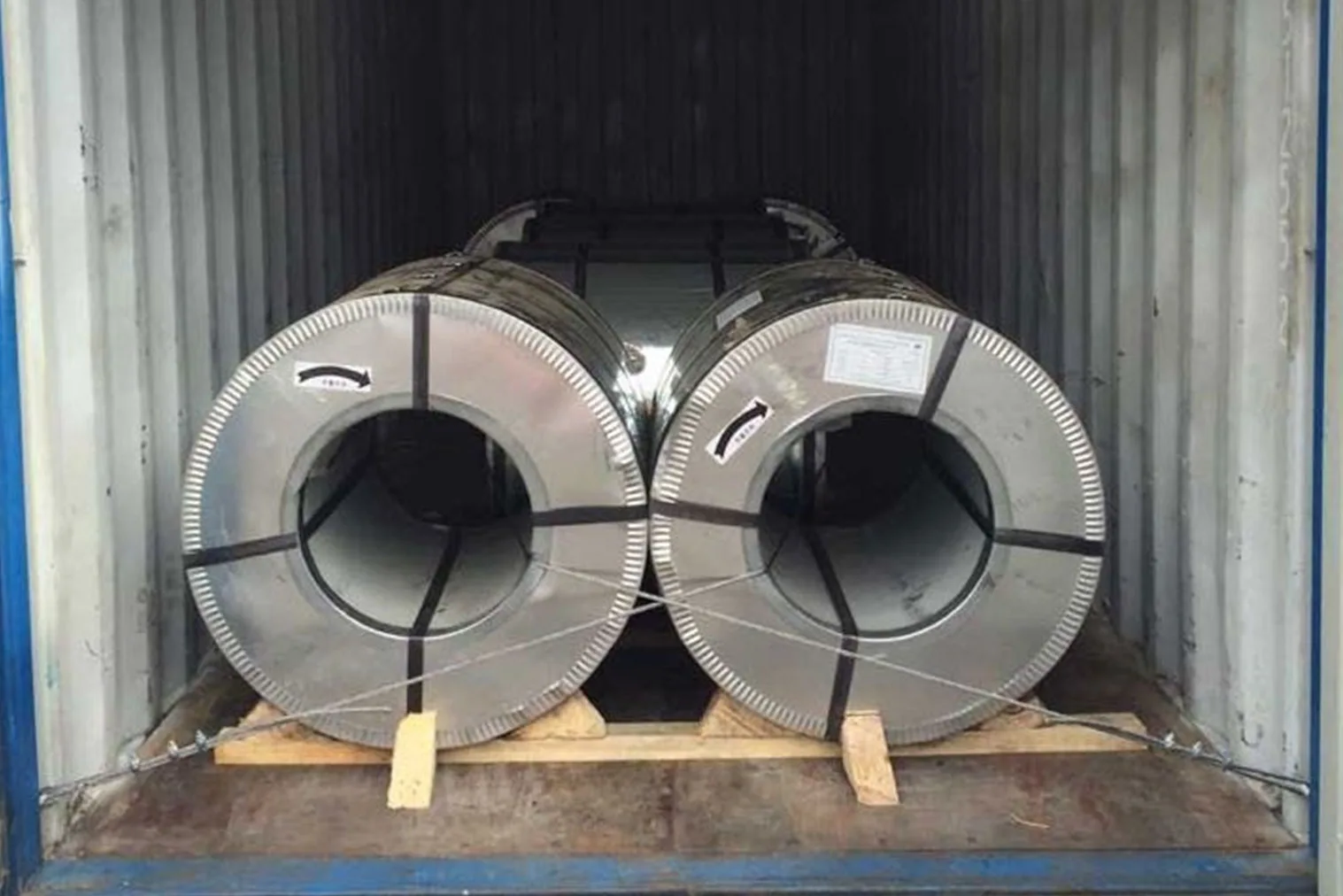
Steel coils secured with wooden blocking and bracing inside a shipping container for safe transport.
Proper blocking and bracing prevent movement and maintain load stability during sea transport.

4. Inspection and Handling Tips for Importers Upon Arrival

Once coils reach their destination, importers should inspect the packaging for any signs of rust, deformation, or water ingress. Minor surface moisture should be dried immediately, while damaged wraps or straps should be documented for claims. Coils must be lifted using rated equipment — never rolled or dragged — and stored on dry, level platforms with adequate spacing for air circulation. Good handling practices at this stage prevent further damage and maintain product quality through the final stage of processing.
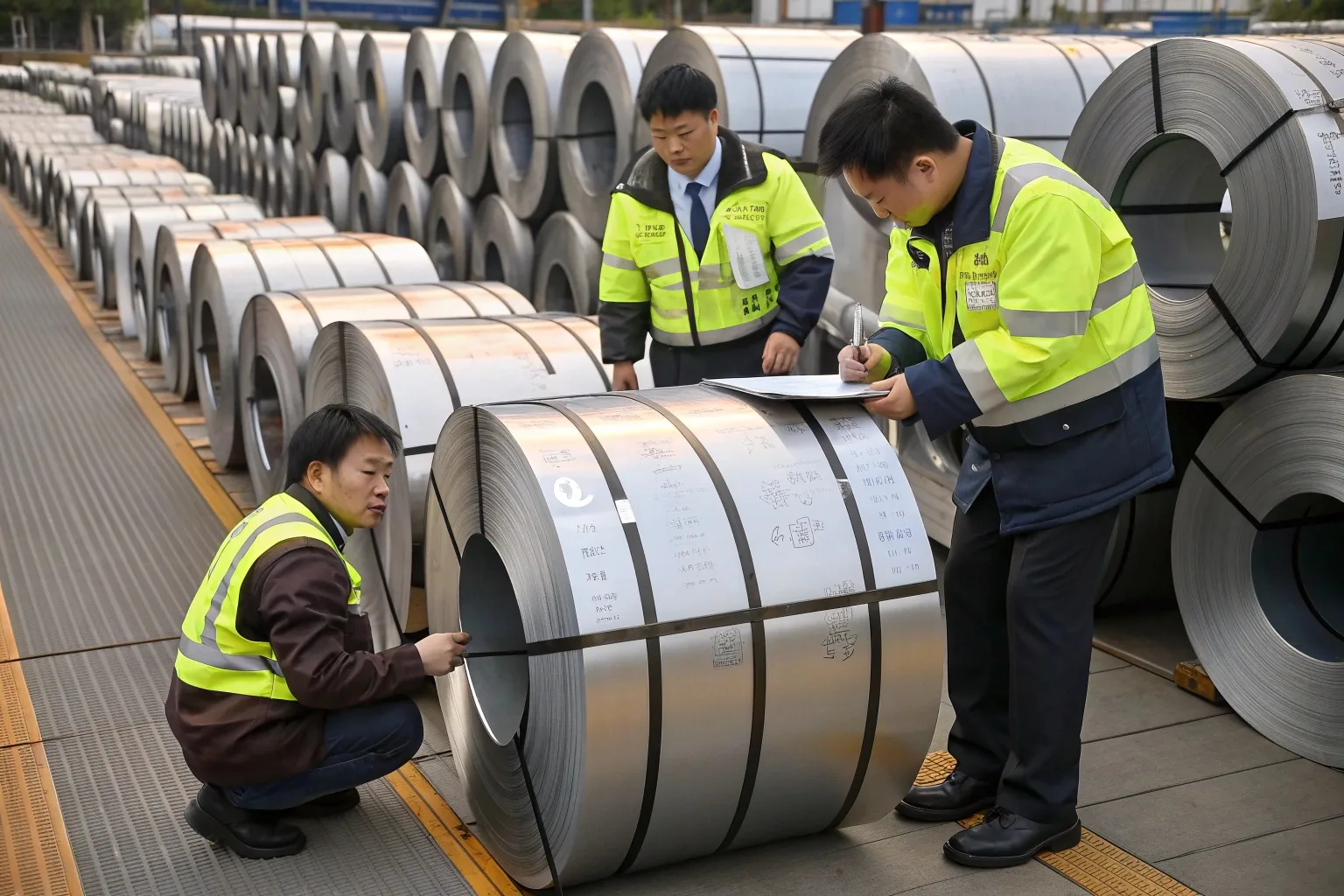
Warehouse staff inspecting incoming steel coils for signs of rust or transport damage.
Inspection upon arrival helps identify any transport-related issues before unpacking or processing.

5. Conclusion

Exporting and importing steel coils safely depends on attention to detail at every stage — from inner corrosion protection and secure strapping to proper blocking, labeling, and inspection. By adopting industry best practices and following international loading standards, both exporters and importers can avoid costly damage, ensure compliance, and maintain the high-quality condition that end users expect. Safe transport isn’t just a logistics task — it’s a key part of protecting your brand reputation and customer trust.
Share :

X
Facebook
LinkedIn
Pinterest
WhatsApp

More Tips

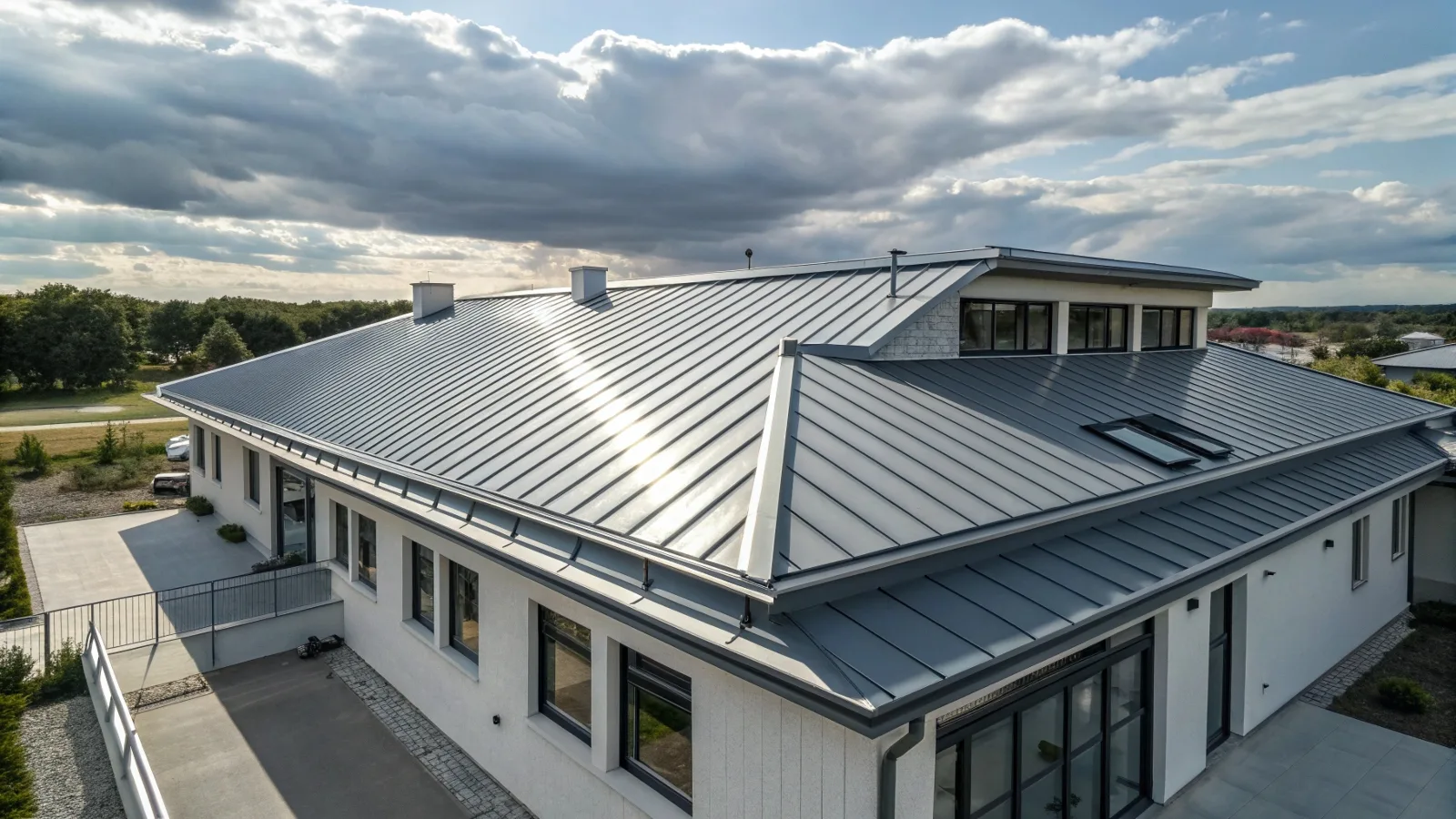
Modern building with a sleek steel roof reflecting sunlight, showcasing the beauty and durability of steel roofing materials.

Beyond Beauty: The Functional Advantages of Choosing Steel for Roofing

Roofing stands as the steadfast guardian of our homes, shielding us from the elements and ensuring the sanctity of our living spaces. In the realm of construction materials, the choice of roofing goes beyond mere aesthetics; it is a critical decision that defines a structure’s resilience and longevity. In this exploration, we turn our focus to steel roofing, delving into the profound functional advantages that extend beyond its captivating exterior, including the versatile steel roofing sheet. As architects and homeowners alike seek roofing solutions that seamlessly blend durability with design, the steel roofing sheet emerges as a frontrunner in the modern construction landscape. Beyond its innate beauty, the steel roofing sheet stands as a testament to engineering excellence, providing a host of functional benefits that elevate it above traditional alternatives. In the pages that follow, we embark on a journey through the robust advantages that steel, particularly the steel roofing

Read More »
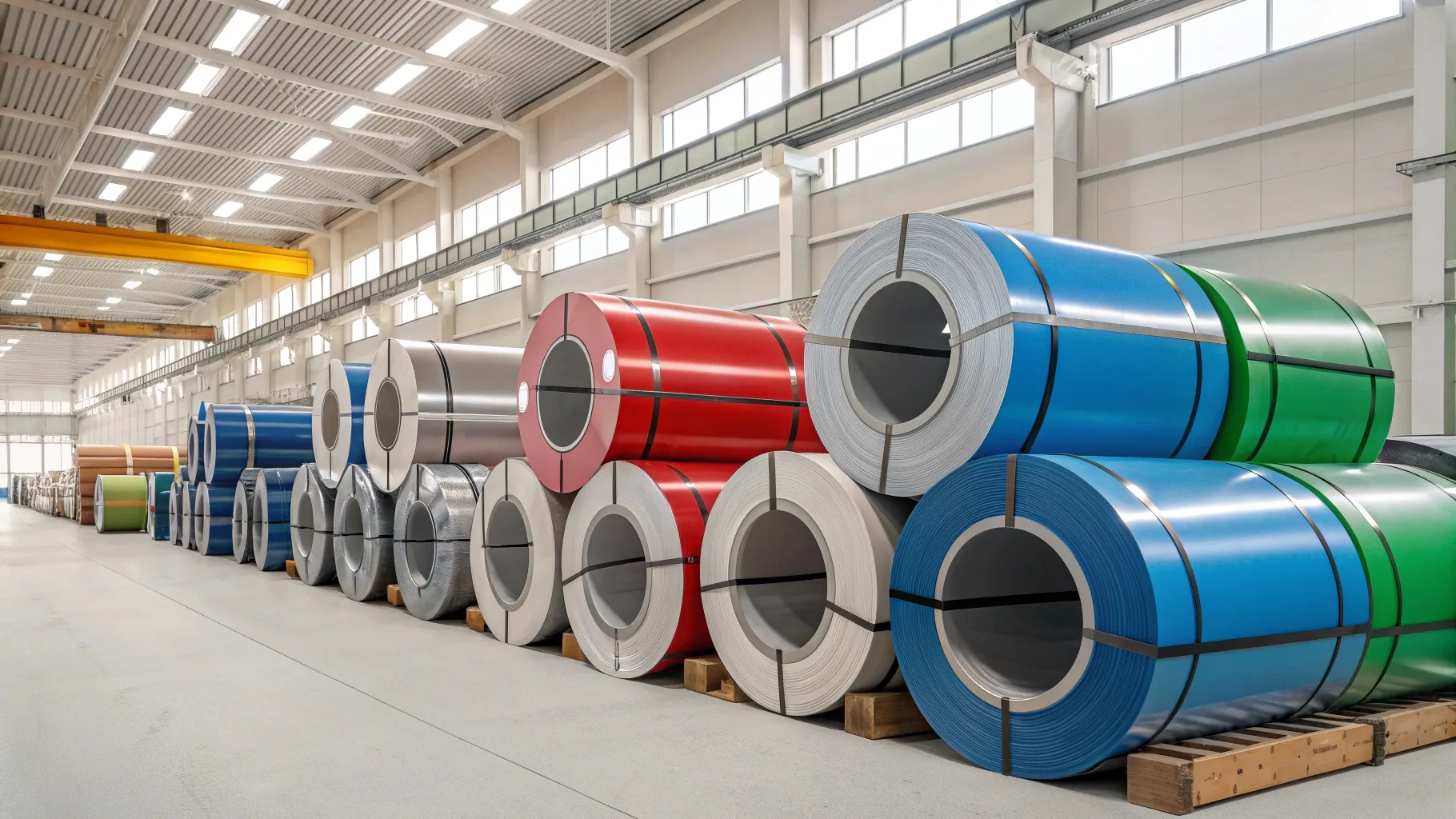
Colorful PPGI steel coils stacked in a modern warehouse, representing durable and aesthetic materials for modern construction.

Why PPGI Steel Coils Remain a Top Choice for Modern Construction

Table of Contents Introduction In today’s fast-paced construction industry, selecting the right materials is essential for long-term durability, cost efficiency, and visual appeal. Among the many steel products available, PPGI (Pre-Painted Galvanized Iron) steel coils have become a popular and reliable choice for builders and developers worldwide. This article explores why PPGI coils continue to lead the way in modern construction. What Are PPGI Steel Coils? PPGI steel coils are produced by applying a color coating to hot-dip galvanized steel. The process involves: This combination provides superior protection against corrosion while adding a wide range of aesthetic options. Key Advantages of PPGI in Construction Claim: PPGI steel coils are not just cost-effective—they deliver long-term performance, aesthetic value, and environmental sustainability in a single solution. 1. Aesthetic Flexibility 2. Corrosion Resistance 3. Lightweight and Easy to Install 4. Durability and Longevity Applications in Modern Construction PPGI steel coils are widely used

Read More »
Large galvanized steel coils arranged neatly in a modern factory warehouse, symbolizing strength and quality in industrial manufacturing.

Galvanized Steel Coil: The Backbone of Industrial Manufacturing

Table of Contents Introduction Galvanized steel coil is a critical material in today’s manufacturing world. Known for its corrosion resistance, mechanical strength, and cost-effectiveness, it plays an essential role in everything from automotive production to HVAC systems. This article explores how galvanized coils are produced, their key advantages, and why they’re an industrial standard worldwide. How Galvanized Steel Coils Are Made Galvanized steel coils are made by applying a protective zinc coating to cold-rolled steel. This can be done through: – **Hot-dip galvanizing (HDG)**: Immersing the steel in molten zinc– **Electro-galvanizing (EG)**: Using electric current to apply zinc Common Specifications: – Thickness: 0.2mm – 3.0mm– Coating: Z40 – Z275– Width: Up to 1250mm– Surface: Regular/zero spangle, skin-passed, oiled or dry Key Advantages in Industrial Manufacturing 1. Corrosion Resistance The zinc layer protects the base metal from oxidation, making it ideal for both indoor and outdoor use. 2. Strength and Formability

Read More »

Hot-Rolled-vs-Cold-Rolled-Steel-Sheets

Hot-Rolled vs. Cold-Rolled Steel Sheets: Key Differences Every Buyer Must Know Visual comparison banner of hot-rolled (left) and cold-rolled (right) steel sheets. Understanding Hot-Rolled Steel Sheets: Process and Properties Hot-rolled steel sheets with characteristic deep-gray, rough surface and mill scale texture. Hot-rolled steel sheets are produced by rolling steel at high temperatures, typically above 1,700°F (927°C). This process keeps the steel malleable and makes it easier to shape into large sheets. Hot-rolled sheets generally have a rougher surface texture due to mill scale and slight variations in thickness. Personal Insight: Hot-rolled steel is usually deep gray in color, with better plasticity and ductility, making it suitable for high-temperature applications. Typical thickness ranges between 1.1–1.4mm. Exploring Cold-Rolled Steel Sheets: Process and Properties Cold-rolled steel sheets featuring a smooth, silver-colored, reflective surface. Cold-rolled steel sheets are manufactured by taking hot-rolled steel and processing it further at room temperature. This additional step improves

Read More »
Trusted Steel Supplier

Build Stronger with Premium Steel Solutions

Explore our wide range of galvanized, galvalume, and color-coated steel products for your next project.

Get A Quick Price Today