
Panoramic view of steel coils and logistics trucks representing the roofing steel supply chain from mill to roof.

How does the supply chain of roofing steel sheets work, from mill to roof?

From Mill to Roof: Understanding the Roofing Steel Supply Chain

Claim:
The roofing steel sheet supply chain is a story of transformation — from raw material to a finished product protecting homes and buildings. Understanding how each step connects helps buyers, distributors, and contractors ensure quality, reliability, and timely delivery.


Table of Contents


Panoramic view of steel coils and logistics trucks representing the roofing steel supply chain from mill to roof.
A panoramic view of the roofing steel supply chain — from mill to logistics.

1. How Steel Sheets Are Produced from Raw Material to Finished Coil
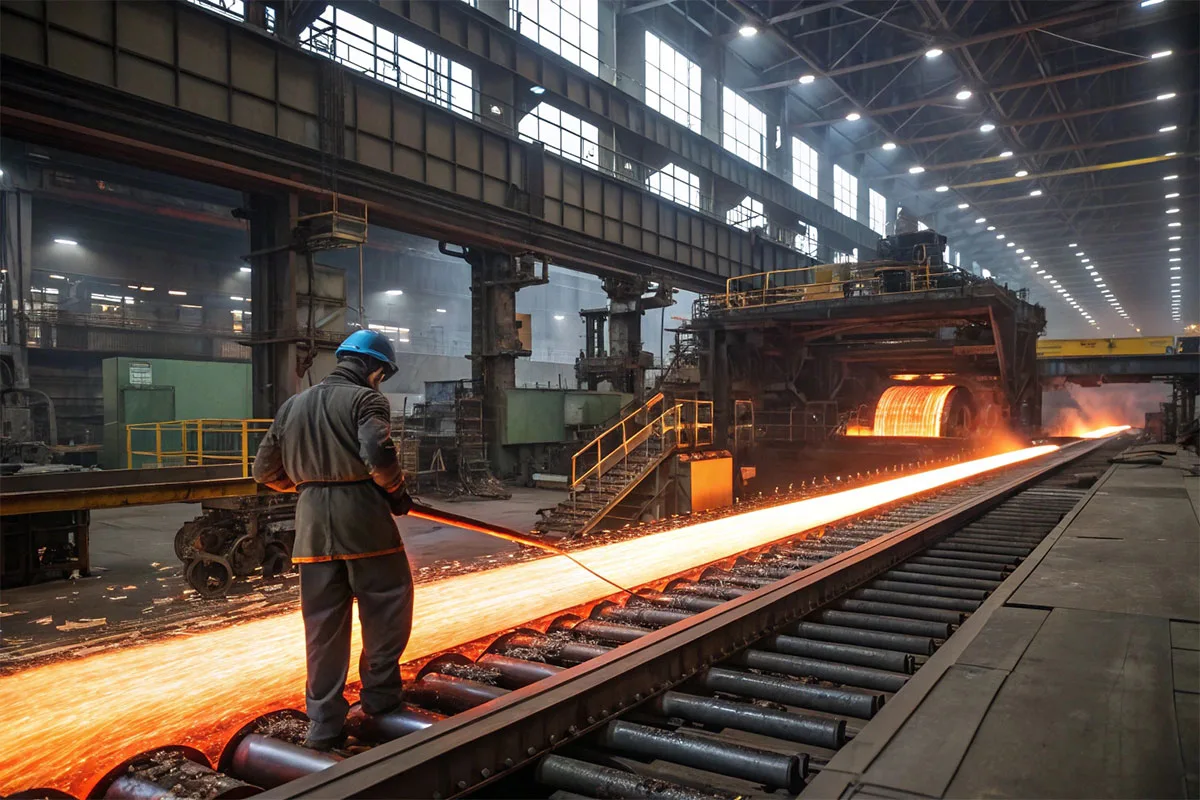
Hot rolled steel coils being processed in a modern steel production facility.
Hot rolled coils being processed in a modern steel mill.

Every roofing sheet begins its journey deep inside a steel mill. Iron ore, scrap steel, zinc, and aluminum are melted and refined to create steel slabs. These slabs are then hot-rolled into thinner sheets, cooled, and often cold-rolled for better surface finish and strength.

After that, the steel goes through galvanizing or Aluzinc coating to prevent rust. Each layer — from substrate to coating — adds durability and resistance, preparing the coils for color coating or profiling.


2. Logistics and Quality Control in Steel Sheet Exportation
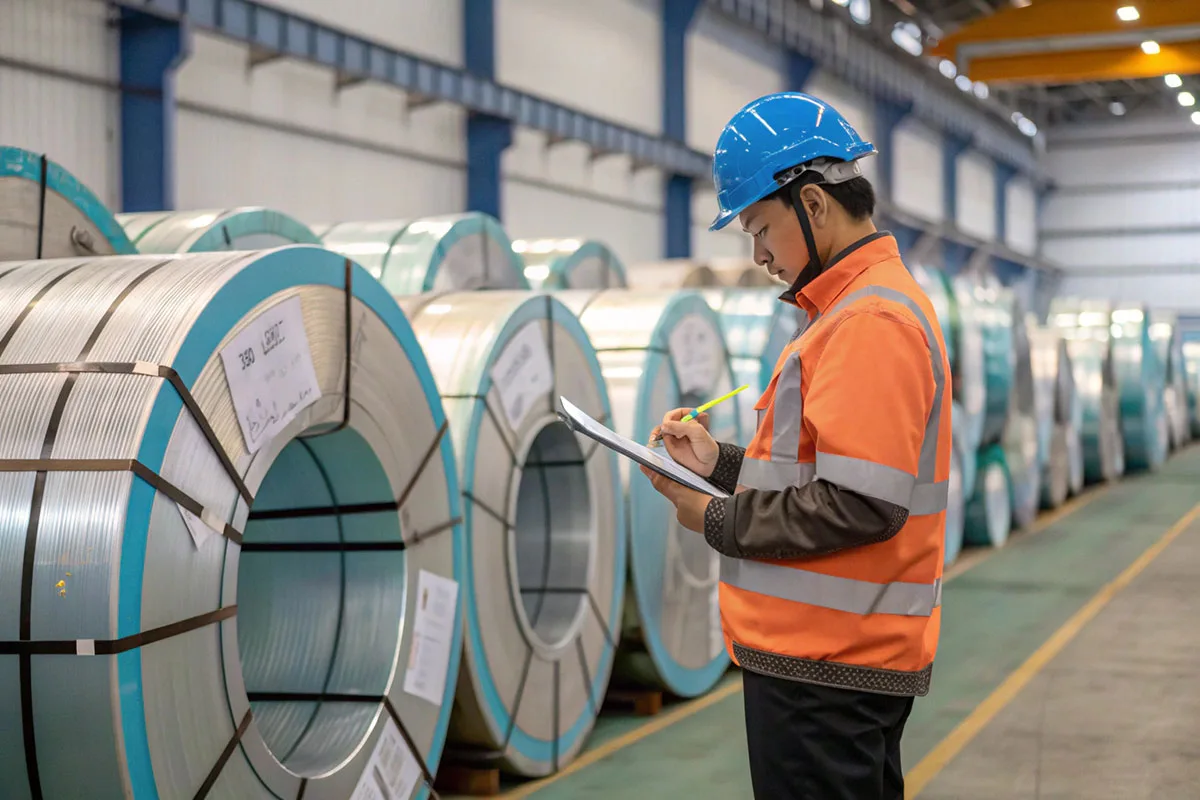
Engineer inspecting galvanized steel coil quality before export shipment.
A technician performs quality checks before shipment.

Once the coils are ready, they’re carefully inspected. Thickness, coating adhesion, surface smoothness, and packing integrity are all checked before shipment. Coils are wrapped with moisture-proof materials and loaded onto containers or trucks for export.

A strong logistics process ensures that products arrive in perfect condition — because a minor dent or scratch can mean costly waste or rejection upon arrival.


3. Common Challenges in the Roofing Steel Supply Chain
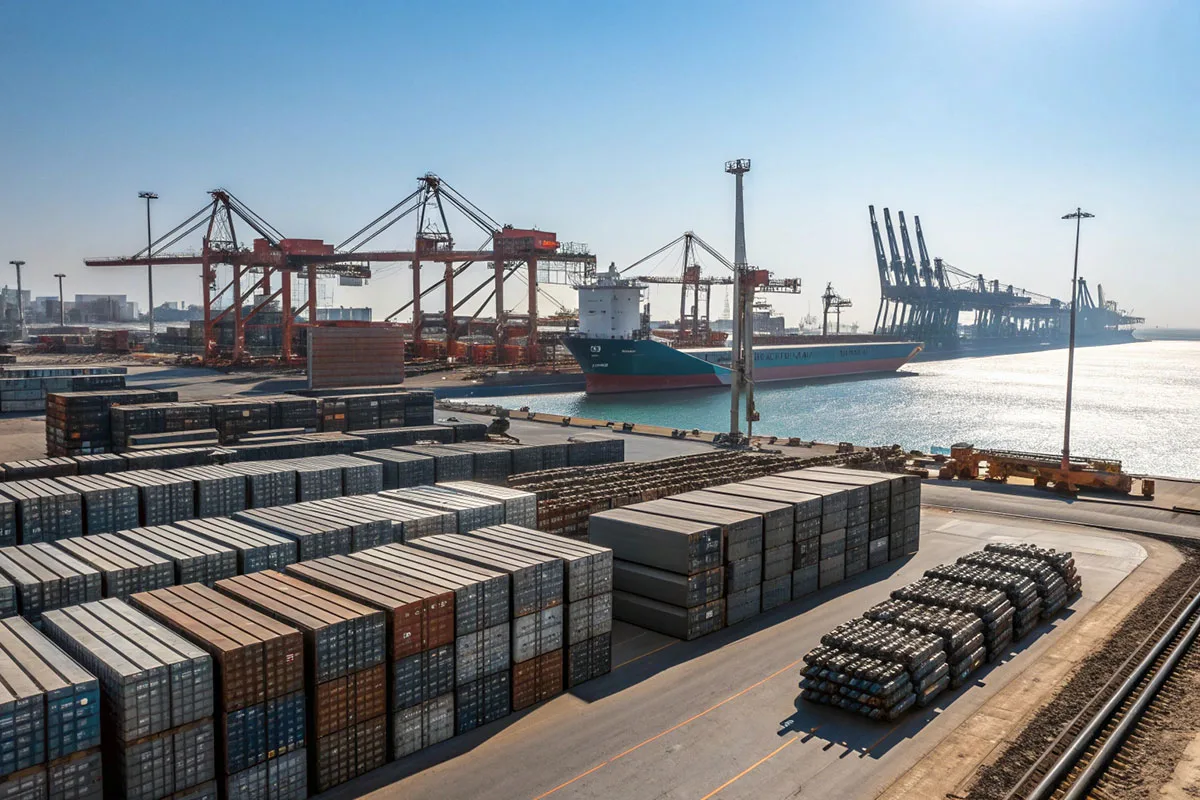
Shipping port with steel coils and cargo containers illustrating supply chain challenges.
A shipping port showing the complexity of steel logistics.

Even a well-managed chain can face unexpected issues. Freight delays, material shortages, or sudden price changes can disrupt schedules and profit margins. Weather, fuel costs, or customs clearance may also cause bottlenecks.

Successful suppliers plan for these uncertainties by maintaining inventory buffers, tracking shipments, and working with reliable forwarders who understand steel cargo requirements.


4. Building Reliable Partnerships Between Mills, Traders, and End Users
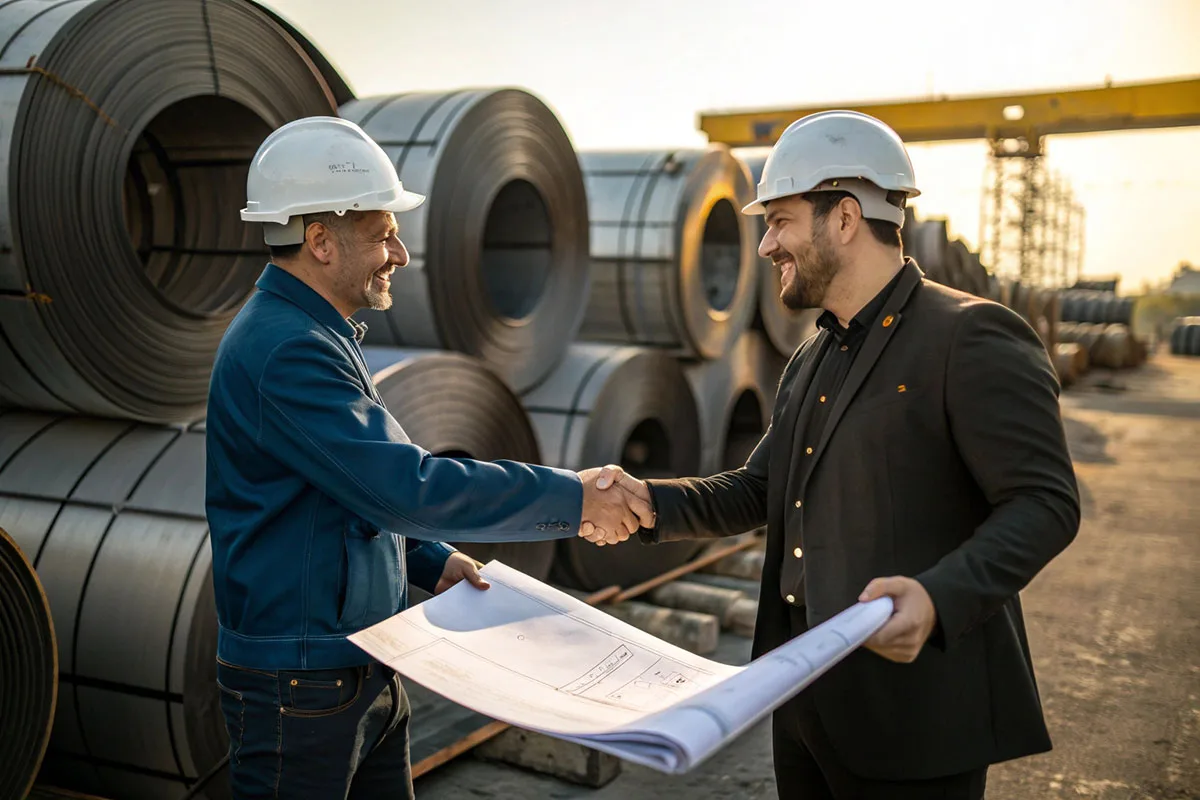
Steel supplier and contractor collaborating on roofing steel project plans.
Strong partnerships ensure consistency, trust, and better project outcomes.

The final link of the chain — and often the most important — is partnership. When mills, traders, and contractors communicate well, everything runs smoothly. Buyers gain consistent quality, suppliers avoid last-minute issues, and projects finish on time.

Great partnerships aren’t just about price; they’re about trust, transparency, and shared commitment to long-term success.


Conclusion

From the mill to the roof, each stage adds value — production, coating, logistics, and collaboration. Understanding this process helps every stakeholder make better decisions, reduce risks, and deliver roofs that last for decades.


Share :

X
Facebook
LinkedIn
Pinterest
WhatsApp

More Tips

Custom steel coil production line showing precision rolling and variable coil thickness.

How do custom thickness and width in steel coils help cut costs for buyers?

How Do Custom Thickness and Width in Steel Coils Help Cut Costs for Buyers? Claim: Customizing the thickness and width of steel coils allows buyers to optimize material usage, reduce waste, and achieve measurable cost savings throughout the production and logistics process. Table of Contents 1. Why Coil Thickness and Width Matter in Industrial Projects 2. How Customized Specifications Improve Material Utilization 3. Cost Optimization Through Precision Rolling and Cutting 4. Partnering with Suppliers for Made-to-Order Steel Coil Solutions 5. Conclusion Precision control in coil rolling helps optimize thickness and reduce waste. 1. Why Coil Thickness and Width Matter in Industrial Projects In any steel fabrication or construction project, choosing the right coil dimensions is crucial. Standard coil sizes often lead to unnecessary cutting, trimming, and leftover materials that end up as scrap. Customizing the coil thickness and width allows buyers to match the material exactly to their production requirements,

Read More »

What Are the Best Practices for Packaging and Shipping Steel Coils Safely for Exporters and Importers?

Packaging and Shipping Steel Coils Safely: Tips for Exporters and Importers Claim: Proper packaging, handling, and loading procedures are essential to protect steel coils from rust, deformation, and transport damage — ensuring product quality, regulatory compliance, and cost efficiency from mill to destination. Table of Contents 1. Common Packaging Methods for Export-Ready Steel Coils 2. How to Prevent Rust, Denting, and Edge Damage During Transport 3. Essential Safety Standards for Loading and Containerization 4. Inspection and Handling Tips for Importers Upon Arrival 5. Conclusion Properly packaged steel coils with protective wrapping and labeling for safe export. 1. Common Packaging Methods for Export-Ready Steel Coils Export packaging for steel coils begins with corrosion prevention and impact protection. The inner layer typically uses corrosion-inhibiting paper or VCI film, followed by waterproof kraft paper or plastic wrapping. Outer layers include steel or PET strapping, edge guards, and sometimes metal or wooden crating for

Read More »
Stacked steel sheets in a modern factory meeting international ASTM, EN, and JIS standards.

How can steel sheets meet international standards like ASTM, EN, and JIS?

Meeting International Standards for Steel Sheets: ASTM, EN, JIS at a Glance Claim: Compliance with ASTM, EN and JIS standards is not just paperwork — it’s a practical way to guarantee material performance, speed up acceptance in export markets, and build trust between suppliers and buyers. Table of Contents Introduction 1. Understanding the Importance of Global Steel Standards 2. Overview of ASTM, EN, and JIS Classifications for Steel Sheets 3. How to Match Your Order Specifications with the Correct Standard 4. Why Compliance Improves Buyer Confidence and Export Value Conclusion Steel sheets ready for export — meeting international standards ensures acceptance and reliability. Introduction In today’s global steel market, buyers and suppliers operate across borders and standards. ASTM (United States), EN (Europe) and JIS (Japan) are three widely recognized systems that define how steel should be made, tested and documented. Meeting these standards helps ensure material safety, interchangeability and predictable

Read More »

What Is the Global Demand Outlook for Steel Sheets and Roofing Products in 2025 and Beyond?

Global Demand Outlook for Steel Sheets and Roofing Products: 2025 and Beyond Claim: Although overall steel demand looks broadly flat in 2025, the outlook for flat steel (sheets & coils) and roofing products shows pockets of stronger growth — especially in emerging markets and in niche applications where metal roofing’s durability and low maintenance are valued. Global steel demand trends through 2025 and beyond — stable volume, regional divergence. Table of Contents 1. Current Market Trends in Global Steel Sheet Consumption 2. Regional Insights: Asia-Pacific, Middle East, and Europe Demand Drivers 3. How Infrastructure Growth Shapes the Roofing Steel Market 4. Forecast 2025–2030: Emerging Opportunities for Exporters Conclusion 1. Current Market Trends in Global Steel Sheet Consumption After several years of volatility, global steel demand is expected to be essentially flat in 2025 — roughly in the range of 1.74–1.75 billion tonnes — with a modest rebound forecast for 2026.

Read More »
Trusted Steel Supplier

Build Stronger with Premium Steel Solutions

Explore our wide range of galvanized, galvalume, and color-coated steel products for your next project.

Get A Quick Price Today