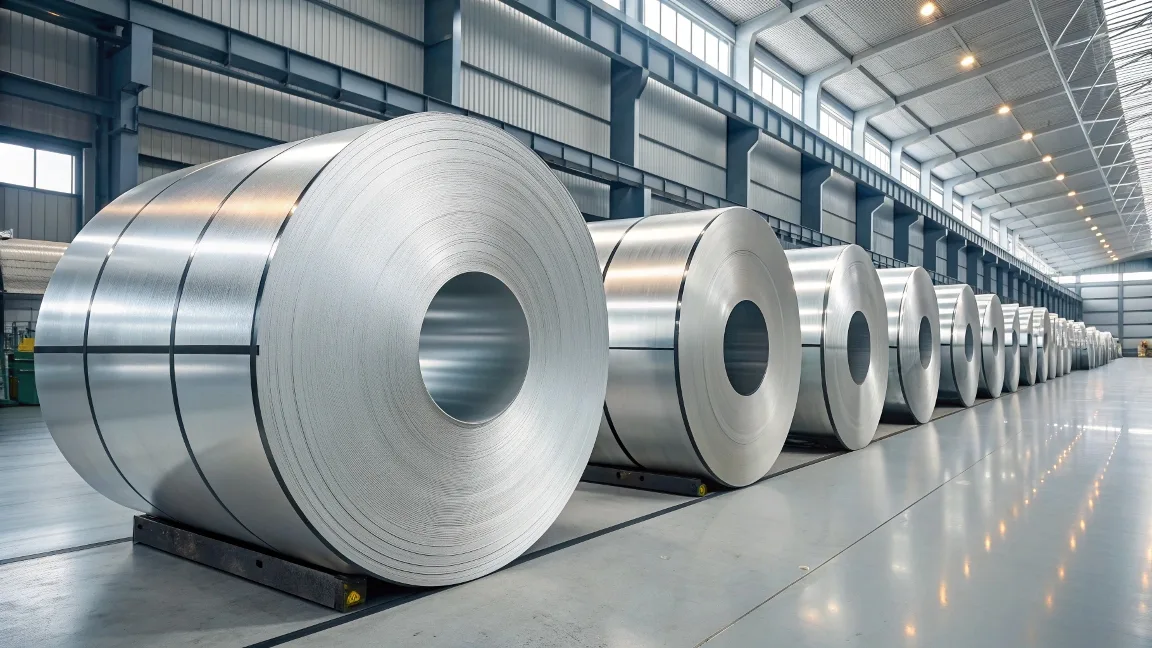
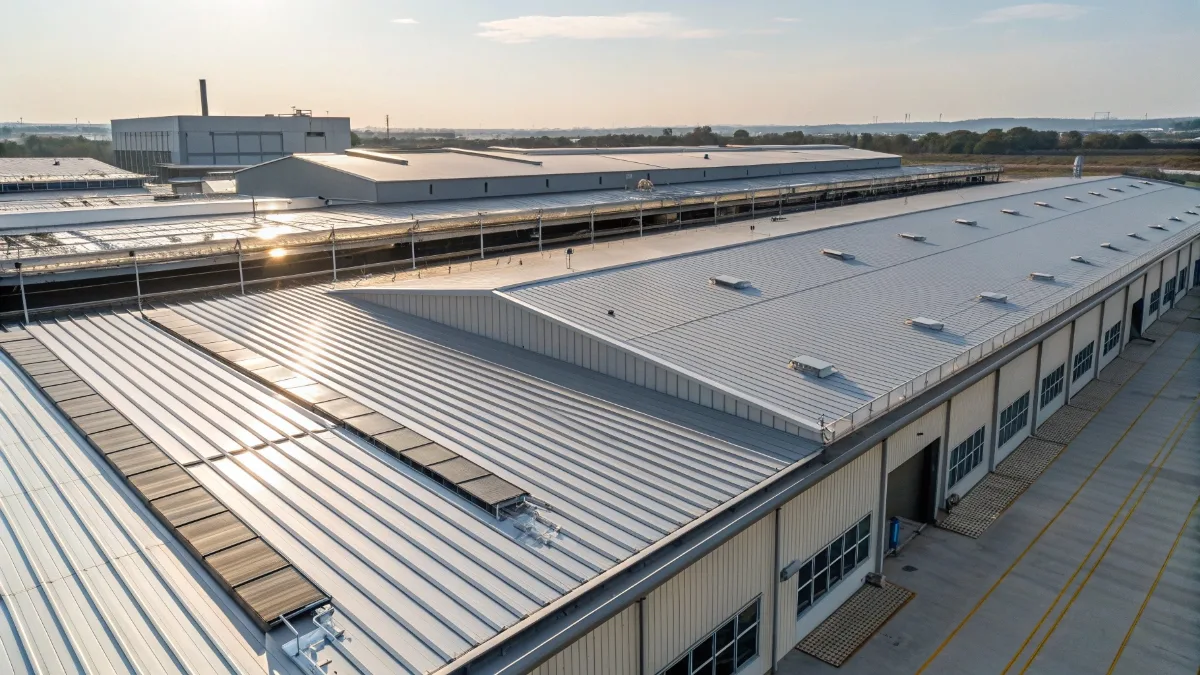
Steel roofing sheets installed on industrial buildings showing strength and durability

How Does Steel Sheet Thickness Impact Roofing Durability and Project Costs?

How Steel Sheet Thickness Impacts Roofing Durability and Project Cost

Steel sheet thickness is one of the most influential factors in metal roofing performance.
It directly affects structural strength, resistance to environmental loads, service life,
and the total cost of a roofing project. Selecting the appropriate thickness is not simply
about choosing the thickest material available—it requires balancing durability, structural
requirements, installation conditions, and budget constraints.

The Role of Steel Sheet Thickness in Roofing Strength
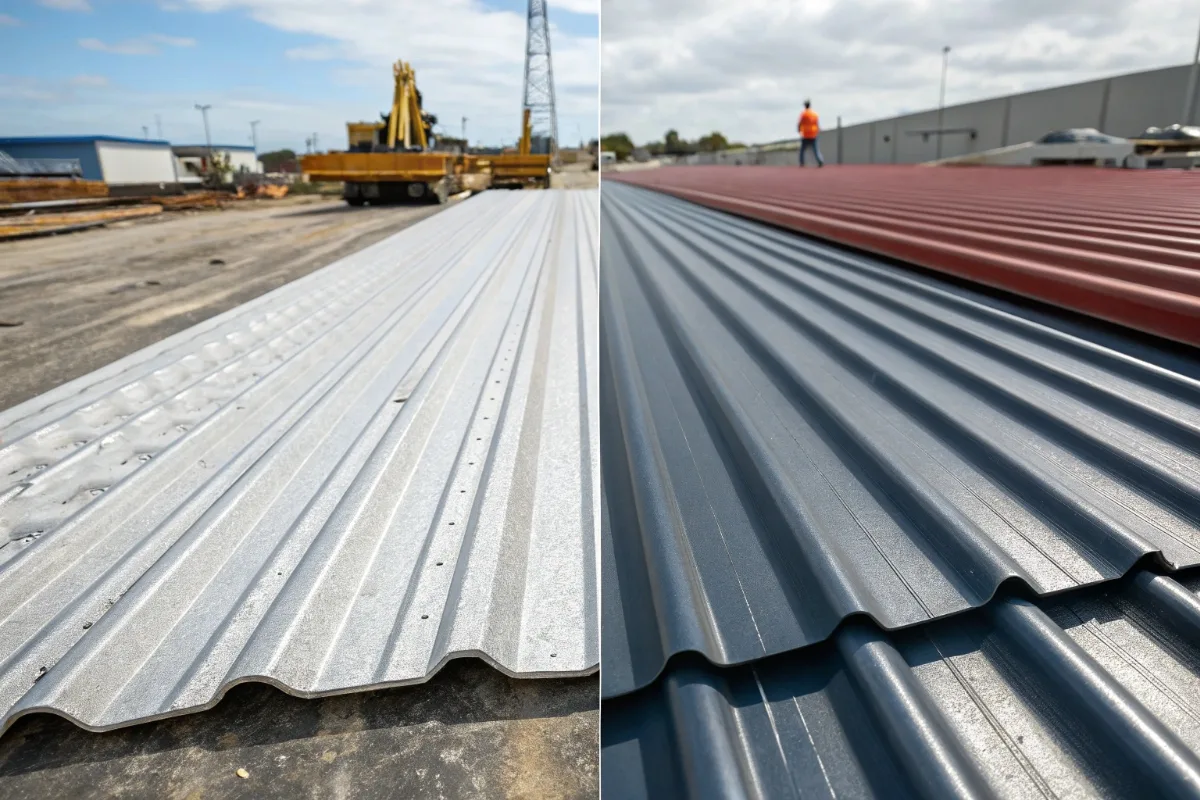
Comparison of thin and thick steel roofing sheets showing structural strength differences
Thicker steel sheets provide greater rigidity and resistance to wind and impact loads.

Thicker steel sheets offer higher structural strength, improving resistance to wind uplift,
impact loads, and foot traffic during installation and maintenance. Increased thickness reduces
the risk of denting and deformation caused by hail, debris, or improper handling, which directly
contributes to better long-term roof appearance and performance.

Sheet thickness also affects fastener retention. Thicker steel provides greater pull-out
resistance for screws and fasteners, reducing the likelihood of loosening under thermal cycling
and repeated wind loads. This is especially critical for large-span industrial and commercial roofs.

How to Choose the Ideal Thickness for Your Project
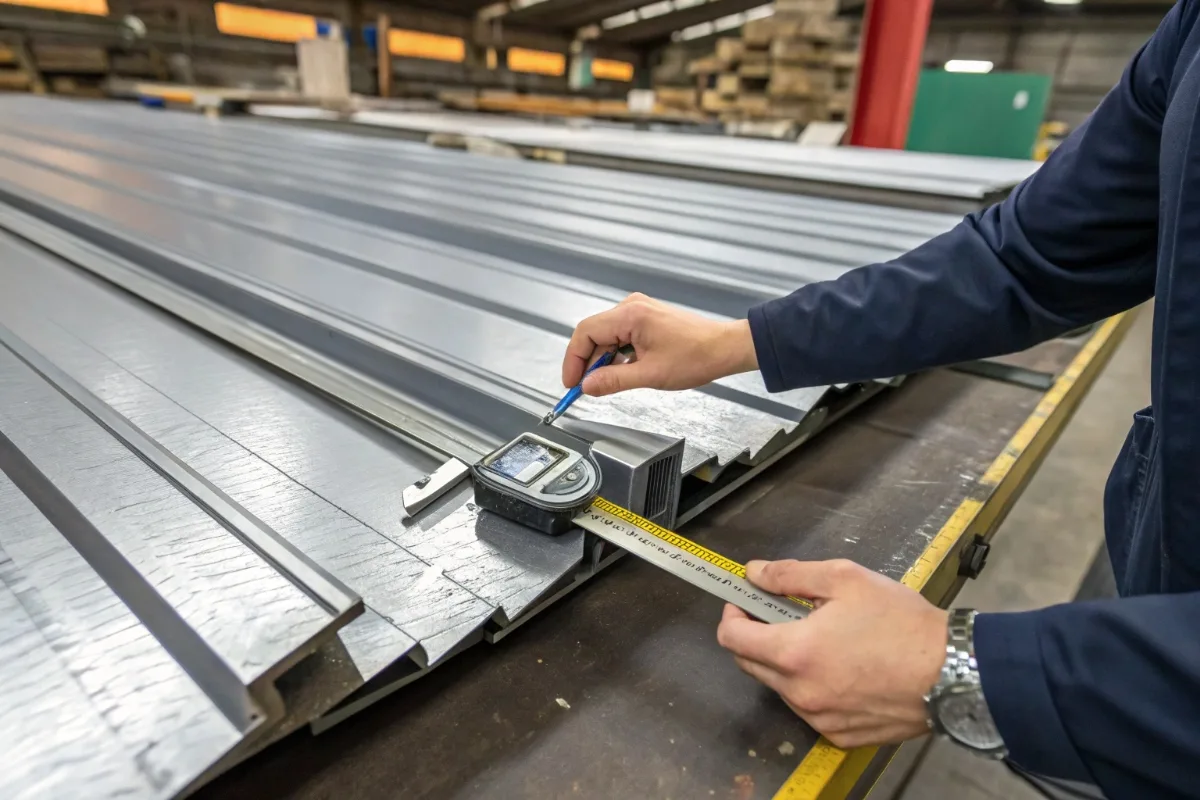
Measuring steel sheet thickness for roofing projects in a factory environment
Accurate thickness measurement ensures roofing materials meet project specifications.

Choosing the ideal steel sheet thickness depends on multiple factors, including building type,
purlin spacing, local wind and snow loads, and installation conditions. While thinner sheets are
easier to form and transport, they are more sensitive to installation quality and workmanship errors.

Thicker sheets delay corrosion penetration, particularly at fasteners, overlaps, and cut edges.
This advantage becomes more significant in coastal, high-humidity, or industrial environments,
where corrosion risk is elevated.

Balancing Cost and Durability
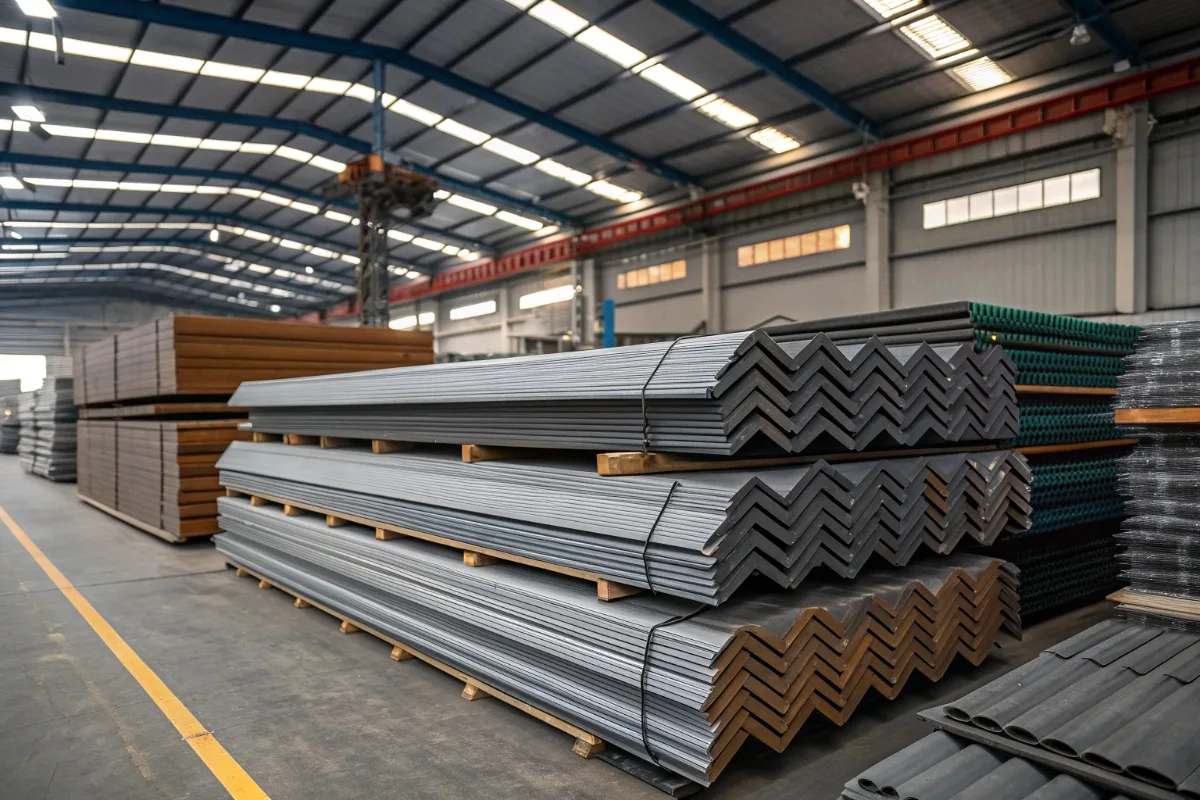
Steel roofing sheets of different thicknesses stacked in a warehouse for cost comparison
Material thickness influences both upfront cost and long-term maintenance expenses.

Thinner steel sheets typically lower initial material costs, but they may require closer purlin
spacing or additional structural support. These adjustments can increase total project cost,
offsetting the savings from thinner material.

Increased thickness improves acoustic performance by reducing vibration and noise from rain or wind.
Thicker roofing sheets also tend to support longer warranties and higher performance classifications,
which can enhance building value and buyer confidence over time.

Real-World Examples: Thin vs. Thick Steel Roofing
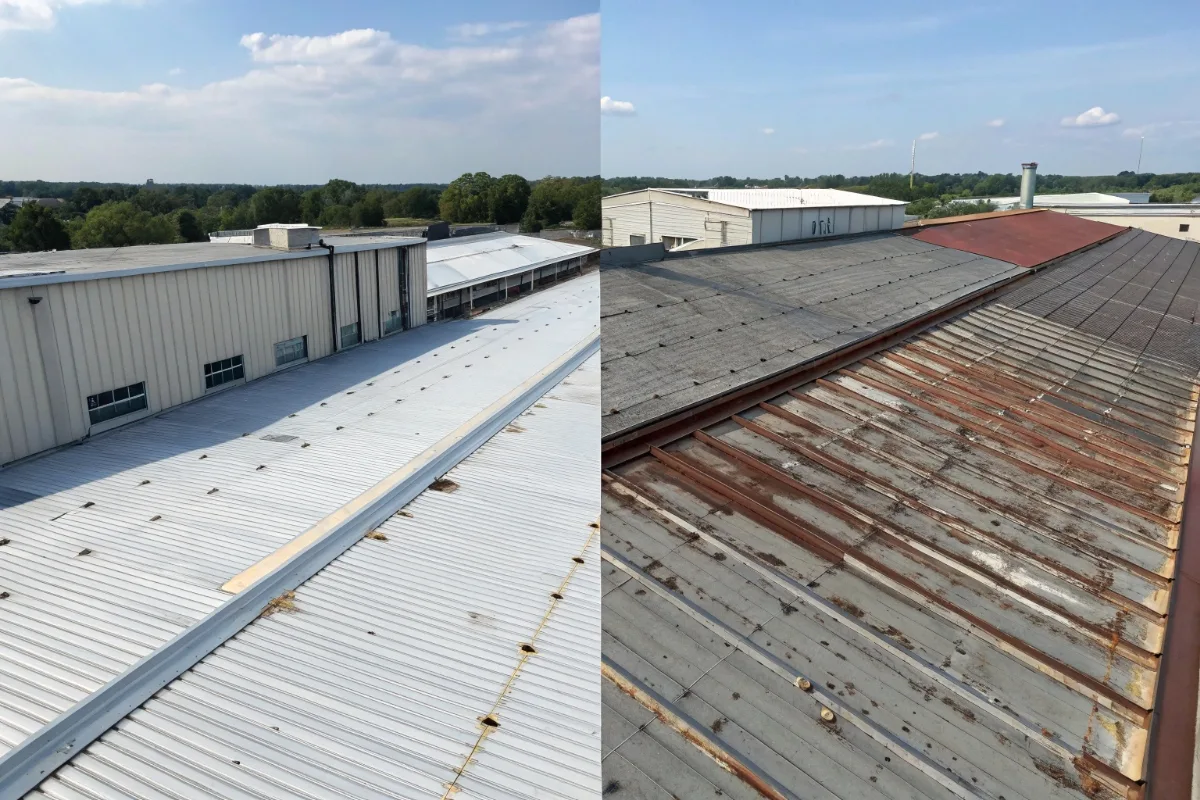
Comparison of thin versus thick steel roofing sheets after long-term outdoor exposure
Performance differences between thin and thick roofing sheets become clear over time.

In real-world applications, thin steel roofing may perform adequately in low-load environments
but often shows faster deformation, increased noise, and reduced fastener stability. Thicker
roofing sheets maintain profile integrity longer and better withstand extreme weather conditions.

Transportation and handling costs do increase with thickness due to higher weight per square meter.
However, when evaluated across the entire lifecycle, thicker sheets frequently deliver better
overall value through extended service life and reduced maintenance.

Conclusion

Steel sheet thickness has a direct and measurable impact on roofing durability, performance, and
total project cost. While thicker sheets provide superior strength, corrosion resistance, and
long-term reliability, selecting the optimal thickness—rather than the maximum thickness—is the
most economically sound decision.

By carefully evaluating structural requirements, environmental exposure, installation quality,
and lifecycle costs, project owners and buyers can select a steel roofing solution that balances
durability and budget while ensuring long-term performance.

Need Help Selecting the Right Steel Roofing Thickness?

Choosing the correct steel sheet thickness can significantly impact project performance and
total cost. If you are comparing specifications, applications, or export requirements,
professional guidance can help you avoid costly mistakes.

Contact us to discuss your roofing project requirements and receive tailored material
recommendations based on your market and application needs.
Share :

X
Facebook
LinkedIn
Pinterest
WhatsApp

More Tips

Modern building with a sleek steel roof reflecting sunlight, showcasing the beauty and durability of steel roofing materials.

Beyond Beauty: The Functional Advantages of Choosing Steel for Roofing

Roofing stands as the steadfast guardian of our homes, shielding us from the elements and ensuring the sanctity of our living spaces. In the realm of construction materials, the choice of roofing goes beyond mere aesthetics; it is a critical decision that defines a structure’s resilience and longevity. In this exploration, we turn our focus to steel roofing, delving into the profound functional advantages that extend beyond its captivating exterior, including the versatile steel roofing sheet. As architects and homeowners alike seek roofing solutions that seamlessly blend durability with design, the steel roofing sheet emerges as a frontrunner in the modern construction landscape. Beyond its innate beauty, the steel roofing sheet stands as a testament to engineering excellence, providing a host of functional benefits that elevate it above traditional alternatives. In the pages that follow, we embark on a journey through the robust advantages that steel, particularly the steel roofing

Read More »
Colorful PPGI steel coils stacked in a modern warehouse, representing durable and aesthetic materials for modern construction.

Why PPGI Steel Coils Remain a Top Choice for Modern Construction

Table of Contents Introduction In today’s fast-paced construction industry, selecting the right materials is essential for long-term durability, cost efficiency, and visual appeal. Among the many steel products available, PPGI (Pre-Painted Galvanized Iron) steel coils have become a popular and reliable choice for builders and developers worldwide. This article explores why PPGI coils continue to lead the way in modern construction. What Are PPGI Steel Coils? PPGI steel coils are produced by applying a color coating to hot-dip galvanized steel. The process involves: This combination provides superior protection against corrosion while adding a wide range of aesthetic options. Key Advantages of PPGI in Construction Claim: PPGI steel coils are not just cost-effective—they deliver long-term performance, aesthetic value, and environmental sustainability in a single solution. 1. Aesthetic Flexibility 2. Corrosion Resistance 3. Lightweight and Easy to Install 4. Durability and Longevity Applications in Modern Construction PPGI steel coils are widely used

Read More »
Large galvanized steel coils arranged neatly in a modern factory warehouse, symbolizing strength and quality in industrial manufacturing.

Galvanized Steel Coil: The Backbone of Industrial Manufacturing

Table of Contents Introduction Galvanized steel coil is a critical material in today’s manufacturing world. Known for its corrosion resistance, mechanical strength, and cost-effectiveness, it plays an essential role in everything from automotive production to HVAC systems. This article explores how galvanized coils are produced, their key advantages, and why they’re an industrial standard worldwide. How Galvanized Steel Coils Are Made Galvanized steel coils are made by applying a protective zinc coating to cold-rolled steel. This can be done through: – **Hot-dip galvanizing (HDG)**: Immersing the steel in molten zinc– **Electro-galvanizing (EG)**: Using electric current to apply zinc Common Specifications: – Thickness: 0.2mm – 3.0mm– Coating: Z40 – Z275– Width: Up to 1250mm– Surface: Regular/zero spangle, skin-passed, oiled or dry Key Advantages in Industrial Manufacturing 1. Corrosion Resistance The zinc layer protects the base metal from oxidation, making it ideal for both indoor and outdoor use. 2. Strength and Formability

Read More »

Hot-Rolled-vs-Cold-Rolled-Steel-Sheets

Hot-Rolled vs. Cold-Rolled Steel Sheets: Key Differences Every Buyer Must Know Visual comparison banner of hot-rolled (left) and cold-rolled (right) steel sheets. Understanding Hot-Rolled Steel Sheets: Process and Properties Hot-rolled steel sheets with characteristic deep-gray, rough surface and mill scale texture. Hot-rolled steel sheets are produced by rolling steel at high temperatures, typically above 1,700°F (927°C). This process keeps the steel malleable and makes it easier to shape into large sheets. Hot-rolled sheets generally have a rougher surface texture due to mill scale and slight variations in thickness. Personal Insight: Hot-rolled steel is usually deep gray in color, with better plasticity and ductility, making it suitable for high-temperature applications. Typical thickness ranges between 1.1–1.4mm. Exploring Cold-Rolled Steel Sheets: Process and Properties Cold-rolled steel sheets featuring a smooth, silver-colored, reflective surface. Cold-rolled steel sheets are manufactured by taking hot-rolled steel and processing it further at room temperature. This additional step improves

Read More »
Trusted Steel Supplier

Build Stronger with Premium Steel Solutions

Explore our wide range of galvanized, galvalume, and color-coated steel products for your next project.

Get A Quick Price Today