How Can Zinc and Aluminum-Zinc Coatings Maximize Corrosion Resistance in Steel?

Maximizing Corrosion Resistance: A Deep Dive into Zinc and Aluminum-Zinc Coatings

Claim:
Zinc and aluminum-zinc coatings don’t just cover steel — they extend its life. With the right coating type, thickness, and detailing, you can dramatically reduce corrosion risk and lower lifetime costs.


Table of Contents


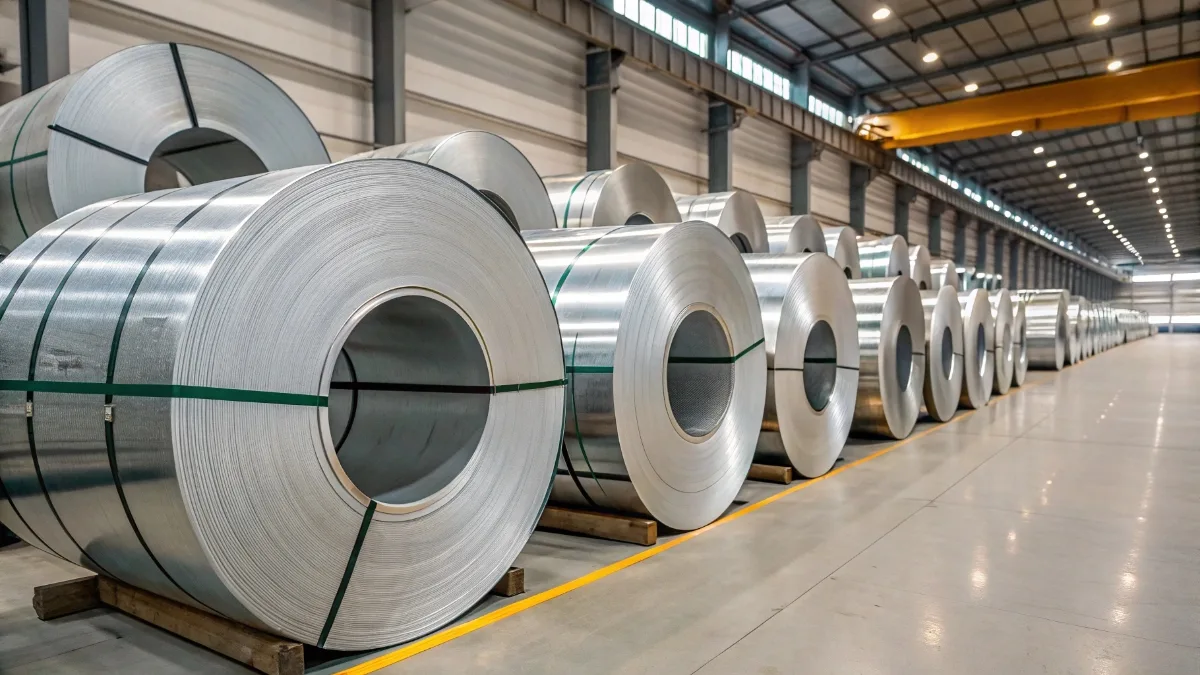
Main comparison: zinc-coated (galvanized) vs aluminum-zinc (Aluzinc) coated steel coils.

1. Why Corrosion Protection Is Critical in Steel Applications

Think of steel as the backbone of a building or structure — but left unprotected, it will rust, weaken, and fail. Corrosion is often invisible at first, but over months and years it eats away at strength, increases maintenance costs, and shortens warranties.

Protective metallic coatings (like zinc or aluminum-zinc) are the simplest, most cost-effective way to postpone corrosion and protect cut edges, fastener holes, and formed areas where paint alone can’t reach.


2. The Science Behind Zinc vs. Alu-Zinc Coating Systems

At a basic level, two mechanisms protect steel:

  1. Barrier protection: A continuous coating prevents moisture and oxygen from reaching the steel surface.
  2. Sacrificial (cathodic) protection: If the coating is damaged, a more reactive metal (zinc) corrodes first, protecting the steel below.

Zinc (galvanized) works mainly by sacrificial protection. It corrodes preferentially so the steel remains protected, especially at cut edges and scratches.

Aluminum-zinc (Aluzinc / GL) combines roughly 55% aluminum with zinc (and a small silicon fraction). The aluminum forms a stable, passive barrier that resists general corrosion, while the zinc component continues to provide sacrificial protection around exposed edges and cuts. In short: you get the best of both worlds.


3. Real-World Performance: How Coating Thickness Affects Durability

Coating thickness (often specified as grams per square meter, g/m²) is one of the most important factors that determines how long a coated steel product will last.

Why thickness matters:

  • More material = more sacrificial metal to corrode before the substrate is exposed.
  • Thicker coatings generally withstand mechanical wear, abrasion, and weathering better.
  • But note: excessive thickness without good adhesion or proper process control can cause brittleness or poor forming performance.

Common examples: a light zinc coating (e.g., Z100) might be fine for indoor or sheltered use. For roofs near the sea or in industrial zones, heavier coatings such as Z275 (or equivalent Aluzinc mass ratings) greatly extend service life. Aluzinc coatings of similar mass frequently show longer lifetimes due to the aluminum’s passive barrier.


4. Choosing the Right Coating Type for Your Climate and Budget

Make selection practical: match environment, expected lifetime, and cost.

Quick guidance:

  • Urban, sheltered, or indoor use: Standard galvanized coatings or light Aluzinc may be sufficient.
  • Rural and general outdoor use: Moderate coating mass (e.g., Z120–Z180 or equivalent) provides good value.
  • Coastal / industrial environments: Heavy-duty Aluzinc or thicker zinc coatings are recommended — Aluzinc often outperforms zinc alone here due to its barrier layer.

Other practical tips:

  • Inspect test data — salt spray and real-weather exposure tests help compare options.
  • Check for good surface prep and consistent application; even the best coating fails on dirty steel.
  • Design details matter: avoid trapped water, isolate dissimilar metals, and protect cut edges with sealants or mechanical protection where possible.

Conclusion

Zinc and aluminum-zinc coatings are proven tools to maximize corrosion resistance. Zinc provides sacrificial protection where it’s needed most; aluminum-zinc adds a stable barrier that slows the whole process down significantly. Choosing the right combination of coating type, coating mass, and smart detailing will give you the best service life for your climate and budget.

Bottom line: Don’t pick coatings by price alone — consider expected lifetime, environment, and the cost of failure. Spec the right coating now and you’ll save money and headaches over the life of the structure.


 

Share :

X
Facebook
LinkedIn
Pinterest
WhatsApp

More Tips

Comparison image of galvanized and galvalume steel coils under daylight showing coating texture differences.

Galvanized vs. Galvalume Steel Coils: Which Is Better for Roofing Projects?

Galvanized vs. Galvalume Steel Coils: Which Is Better for Roofing Projects? Claim: While both galvanized and galvalume steel coils are widely used for roofing, Galvalume generally provides longer service life and better performance in harsh or humid environments, whereas Galvanized steel remains a practical, budget-friendly choice for moderate climates and shorter-term projects. Galvanized (zinc-coated) and Galvalume (aluminum-zinc alloy coated) steel coils side by side — two leading materials for roofing applications. Table of Contents 1. What Are Galvanized and Galvalume Steel Coils? 2. Key Differences in Composition and Performance 3. Advantages and Disadvantages for Roofing Applications 4. How to Choose the Right Coil for Your Climate and Budget Conclusion 1. What Are Galvanized and Galvalume Steel Coils? Both galvanized and galvalume steel coils start as carbon steel sheet that is coated to improve corrosion resistance. The coating is the key difference: Galvanized steel is coated primarily with zinc to provide

Read More »
Diagram comparing ASTM, EN, and JIS steel coil standards

What Are the Top 5 International Quality Standards Every Steel Coil Exporter Should Follow?

Top 5 International Quality Standards Every Steel Coil Exporter Should Follow Claim To compete in the global steel market, exporters must ensure that every steel coil meets internationally recognized standards such as ASTM, EN, JIS, ISO, and SGS Certification. These standards not only define product quality but also build credibility and trust with overseas buyers. Table of Contents Understanding Global Steel Coil Standards (ASTM, EN, JIS) Why Certification Matters for International Trade Common Testing Methods for Steel Coil Quality How to Ensure Compliance and Build Buyer Trust Conclusion Understanding Global Steel Coil Standards (ASTM, EN, JIS) Global buyers expect steel coils that meet unified performance benchmarks. The three most widely used international standards include: ASTM (American Society for Testing and Materials): Sets technical standards for chemical composition, tensile strength, yield, and coating thickness—essential for buyers in the US and Latin America. EN (European Norm): Defines structural and surface requirements for

Read More »

What Is the Difference Between PPGI and PPGL?

Table of Contents Performance Comparison: Durability, Color, and Corrosion Resistance Best Applications for Each Coil Type How to Choose the Right Product for Your Target Market PPGI and PPGL are two widely used pre-painted steel coil types in international construction, roofing, and manufacturing sectors. Although both belong to the “pre-painted steel” category, the coating composition and performance differ significantly, leading to different applications and market suitability. Performance Comparison: Durability, Color, and Corrosion Resistance    Technical comparison of PPGI vs PPGL coating layers. The primary difference between PPGI and PPGL lies in the metallic coating applied before the painting layer. PPGI uses pure zinc coating, while PPGL applies a special aluminium-zinc alloy. This alloy dramatically enhances corrosion resistance and heat reflectivity, making PPGL more durable in harsh outdoor environments. Best Applications for Each Coil Type Environmental comparison: PPGI for mild climates, PPGL for coastal/high humidity regions. PPGI is widely used where

Read More »
Why zinc coating thickness matters for galvanized steel coils

Why Does Zinc Coating Thickness Matter for Long-Lasting Steel Coils?

Zinc coating thickness is one of the most critical factors determining the real service life of galvanized and aluminum-zinc coated steel coils. While many buyers focus on base steel grade or price, coating mass directly influences corrosion resistance, durability, and total lifecycle cost — especially in demanding environments. Understanding Zinc Coating Layers and Symbols (Z, AZ) Zinc coatings are typically specified using symbols such as Z (pure zinc) or AZ (aluminum-zinc alloy). These symbols represent not only the coating type, but also the protective mechanism. Pure zinc provides sacrificial protection, while aluminum-zinc coatings combine barrier protection with sacrificial behavior. Common coating mass designations like Z100, Z180, Z275 or AZ150, AZ185 indicate the total coating weight applied to both sides of the steel sheet and are directly linked to expected corrosion resistance. How Coating Thickness Affects Corrosion Resistance Thicker zinc coatings significantly slow corrosion progression compared to thin coatings. Zinc protects

Read More »
Trusted Steel Supplier

Build Stronger with Premium Steel Solutions

Explore our wide range of galvanized, galvalume, and color-coated steel products for your next project.

Get A Quick Price Today