
Stacked steel sheets in a modern factory meeting international ASTM, EN, and JIS standards.

How can steel sheets meet international standards like ASTM, EN, and JIS?

Meeting International Standards for Steel Sheets: ASTM, EN, JIS at a Glance

Claim:
Compliance with ASTM, EN and JIS standards is not just paperwork — it’s a practical way to guarantee material performance, speed up acceptance in export markets, and build trust between suppliers and buyers.


Stacked steel sheets in a modern factory meeting international ASTM, EN, and JIS standards.
Steel sheets ready for export — meeting international standards ensures acceptance and reliability.

Introduction

In today’s global steel market, buyers and suppliers operate across borders and standards. ASTM (United States), EN (Europe) and JIS (Japan) are three widely recognized systems that define how steel should be made, tested and documented. Meeting these standards helps ensure material safety, interchangeability and predictable performance in a wide range of applications — from building structures to appliances.


1. Understanding the Importance of Global Steel Standards
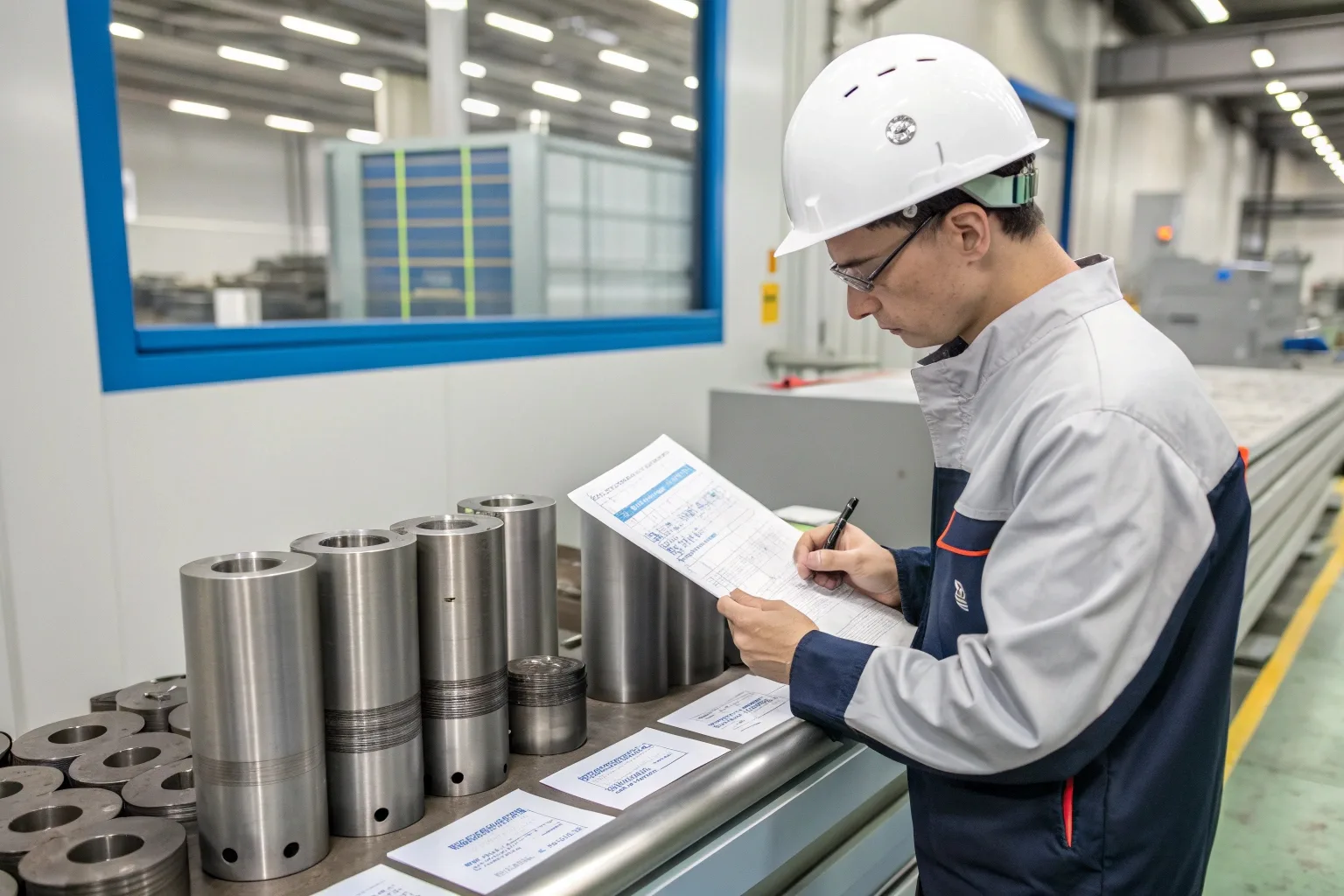
Standards exist to remove ambiguity. They specify chemical composition limits, mechanical properties (yield strength, tensile strength, elongation), dimensional tolerances, surface finish and acceptable coatings. For buyers, a standard acts like a contract: it tells the mill exactly what to produce and gives both parties a measurable way to confirm conformity.

Beyond technical clarity, standards reduce commercial risk: they simplify inspection, lower the chance of disputes, and make it easier to accept materials on large infrastructure and export projects.


2. Overview of ASTM, EN, and JIS Classifications for Steel Sheets
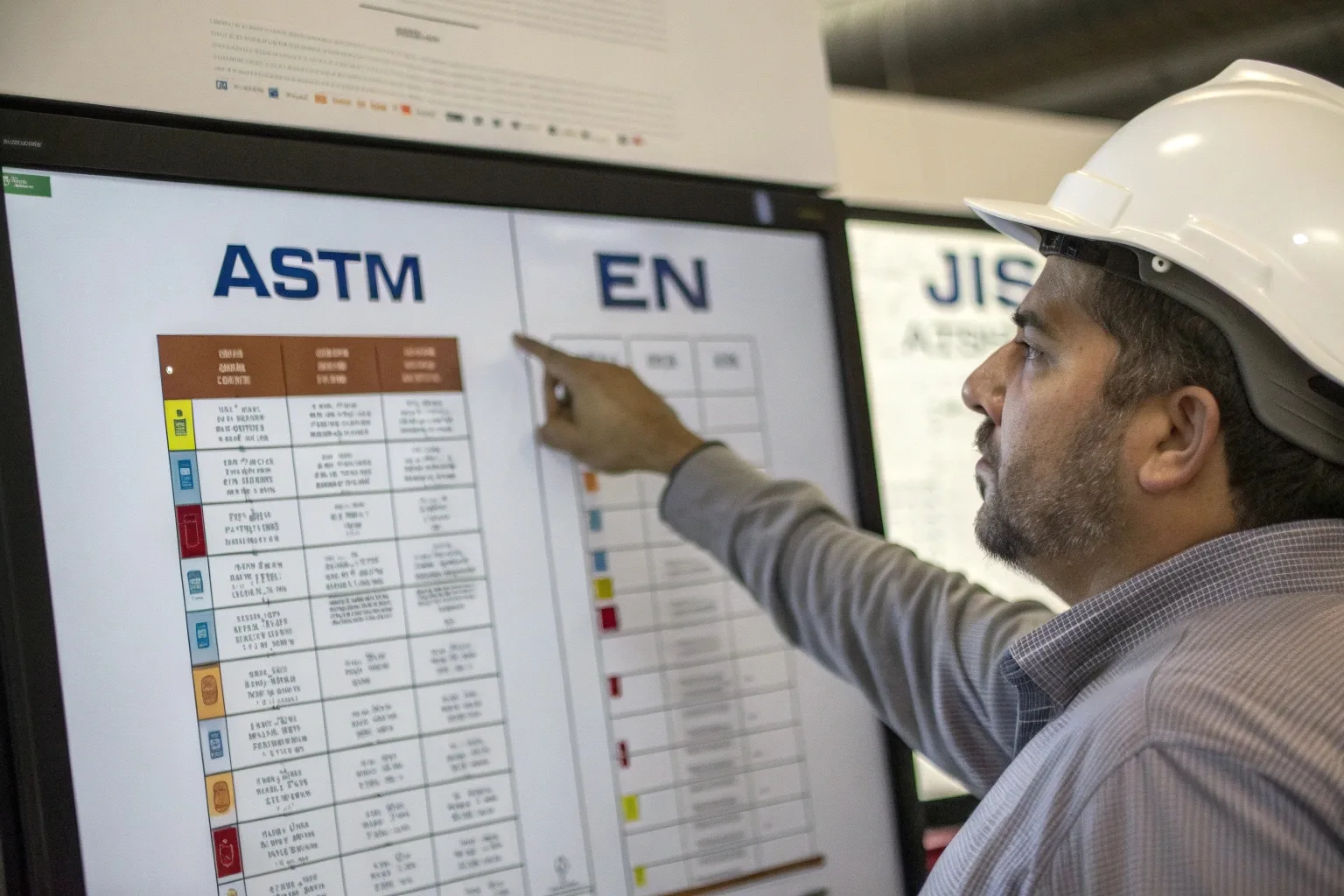
Each standards body uses its own structure and grade names, but the goals are similar: define properties and tests so users know what to expect.

  • ASTM often names standards by number (for example, many sheet/coil specs fall under ASTM A1011, A653, or A792) and emphasizes detailed mechanical and chemical requirements.
  • EN standards (such as EN 10346) focus on product families, dimensional tolerances and coating classes commonly used in Europe and widely accepted elsewhere.
  • JIS standards (for example, JIS G series) describe cold-rolled, hot-rolled and coated products commonly used across Japan and many Asian markets.

Knowing typical equivalents or close matches between these systems helps buyers source material that will be accepted in different markets without extensive re-testing.


3. How to Match Your Order Specifications with the Correct Standard

Buyer and supplier reviewing steel sheet specifications to match ASTM, EN, or JIS standards.

Practical steps to ensure your steel meets the right standard:

  1. State the exact standard and grade on the purchase order. Include the standard number and grade designation so the mill has clear instructions.
  2. Define the delivery condition. Specify whether you require hot-rolled, cold-rolled, pickled, galvanized, or color-coated material.
  3. Request mill test certificates (MTC). MTCs should reference the chosen standard and show chemical and mechanical test results tied to heat or batch numbers.
  4. Specify dimensional tolerances and surface requirements. Thickness, width, flatness and coating mass should be clearly defined — don’t assume “standard” means the same thing to every supplier.
  5. Ask for traceability. Heat numbers and batch IDs let you trace any issue back to the production run and provide evidence of conformity for audits or certifications.

These steps reduce the chance of receiving material that looks right but fails to meet the technical expectations of a project.


4. Why Compliance Improves Buyer Confidence and Export Value


When sheets are certified to a recognized standard, buyers can accept deliveries faster and with less risk. Certification streamlines customs clearance and opens access to projects that mandate specific standards. For exporters, standardized product declarations reduce friction in new markets and often command better prices because buyers can rely on documented, repeatable performance.

Moreover, using recognized standards supports quality systems and audits — buyers can require factory inspections, third-party testing or certification to further strengthen confidence.


Conclusion

Meeting ASTM, EN or JIS standards is a practical, business-focused way to guarantee the technical quality of steel sheets and to unlock global market opportunities. Clear purchase orders, thorough documentation (MTCs, heat numbers), and careful verification of chemical, mechanical and dimensional data are the core actions that ensure compliance. For buyers and sellers alike, standards reduce uncertainty, speed acceptance, and increase the value of each transaction.

Share :

X
Facebook
LinkedIn
Pinterest
WhatsApp

More Tips

How Can Zinc and Aluminum-Zinc Coatings Maximize Corrosion Resistance in Steel?

Maximizing Corrosion Resistance: A Deep Dive into Zinc and Aluminum-Zinc Coatings Claim: Zinc and aluminum-zinc coatings don’t just cover steel — they extend its life. With the right coating type, thickness, and detailing, you can dramatically reduce corrosion risk and lower lifetime costs. Table of Contents 1. Why Corrosion Protection Is Critical in Steel Applications 2. The Science Behind Zinc vs. Alu-Zinc Coating Systems 3. Real-World Performance: How Coating Thickness Affects Durability 4. Choosing the Right Coating Type for Your Climate and Budget Conclusion Main comparison: zinc-coated (galvanized) vs aluminum-zinc (Aluzinc) coated steel coils. 1. Why Corrosion Protection Is Critical in Steel Applications Think of steel as the backbone of a building or structure — but left unprotected, it will rust, weaken, and fail. Corrosion is often invisible at first, but over months and years it eats away at strength, increases maintenance costs, and shortens warranties. Protective metallic coatings (like

Read More »
Custom steel coil production line showing precision rolling and variable coil thickness.

How do custom thickness and width in steel coils help cut costs for buyers?

How Do Custom Thickness and Width in Steel Coils Help Cut Costs for Buyers? Claim: Customizing the thickness and width of steel coils allows buyers to optimize material usage, reduce waste, and achieve measurable cost savings throughout the production and logistics process. Table of Contents 1. Why Coil Thickness and Width Matter in Industrial Projects 2. How Customized Specifications Improve Material Utilization 3. Cost Optimization Through Precision Rolling and Cutting 4. Partnering with Suppliers for Made-to-Order Steel Coil Solutions 5. Conclusion Precision control in coil rolling helps optimize thickness and reduce waste. 1. Why Coil Thickness and Width Matter in Industrial Projects In any steel fabrication or construction project, choosing the right coil dimensions is crucial. Standard coil sizes often lead to unnecessary cutting, trimming, and leftover materials that end up as scrap. Customizing the coil thickness and width allows buyers to match the material exactly to their production requirements,

Read More »

What Are the Best Practices for Packaging and Shipping Steel Coils Safely for Exporters and Importers?

Packaging and Shipping Steel Coils Safely: Tips for Exporters and Importers Claim: Proper packaging, handling, and loading procedures are essential to protect steel coils from rust, deformation, and transport damage — ensuring product quality, regulatory compliance, and cost efficiency from mill to destination. Table of Contents 1. Common Packaging Methods for Export-Ready Steel Coils 2. How to Prevent Rust, Denting, and Edge Damage During Transport 3. Essential Safety Standards for Loading and Containerization 4. Inspection and Handling Tips for Importers Upon Arrival 5. Conclusion Properly packaged steel coils with protective wrapping and labeling for safe export. 1. Common Packaging Methods for Export-Ready Steel Coils Export packaging for steel coils begins with corrosion prevention and impact protection. The inner layer typically uses corrosion-inhibiting paper or VCI film, followed by waterproof kraft paper or plastic wrapping. Outer layers include steel or PET strapping, edge guards, and sometimes metal or wooden crating for

Read More »

What Is the Global Demand Outlook for Steel Sheets and Roofing Products in 2025 and Beyond?

Global Demand Outlook for Steel Sheets and Roofing Products: 2025 and Beyond Claim: Although overall steel demand looks broadly flat in 2025, the outlook for flat steel (sheets & coils) and roofing products shows pockets of stronger growth — especially in emerging markets and in niche applications where metal roofing’s durability and low maintenance are valued. Global steel demand trends through 2025 and beyond — stable volume, regional divergence. Table of Contents 1. Current Market Trends in Global Steel Sheet Consumption 2. Regional Insights: Asia-Pacific, Middle East, and Europe Demand Drivers 3. How Infrastructure Growth Shapes the Roofing Steel Market 4. Forecast 2025–2030: Emerging Opportunities for Exporters Conclusion 1. Current Market Trends in Global Steel Sheet Consumption After several years of volatility, global steel demand is expected to be essentially flat in 2025 — roughly in the range of 1.74–1.75 billion tonnes — with a modest rebound forecast for 2026.

Read More »
Trusted Steel Supplier

Build Stronger with Premium Steel Solutions

Explore our wide range of galvanized, galvalume, and color-coated steel products for your next project.

Get A Quick Price Today