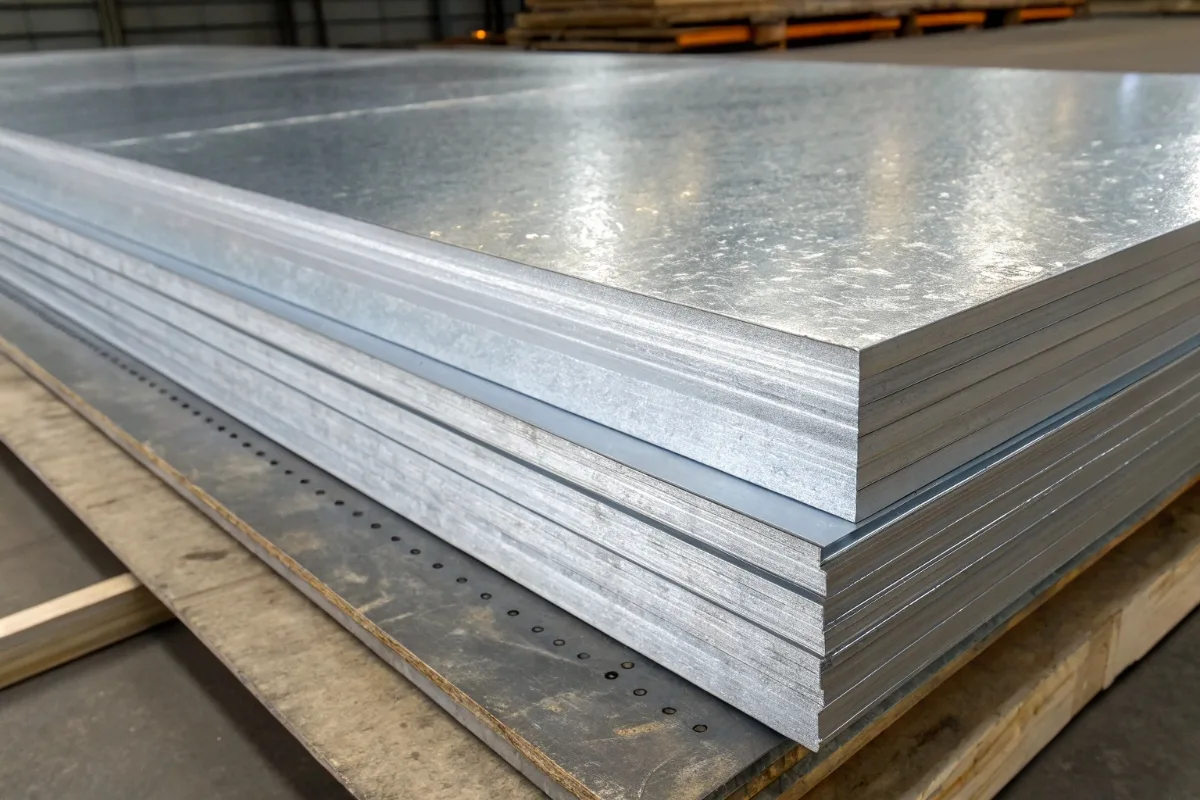
Comparison image of galvanized and galvalume steel coils under daylight showing coating texture differences.

Galvanized vs. Galvalume Steel Coils: Which Is Better for Roofing Projects?

Galvanized vs. Galvalume Steel Coils: Which Is Better for Roofing Projects?

Claim:
While both galvanized and galvalume steel coils are widely used for roofing, Galvalume generally provides longer service life and better performance in harsh or humid environments, whereas Galvanized steel remains a practical, budget-friendly choice for moderate climates and shorter-term projects.

Comparison image of galvanized and galvalume steel coils under daylight showing coating texture differences.
Galvanized (zinc-coated) and Galvalume (aluminum-zinc alloy coated) steel coils side by side — two leading materials for roofing applications.

Table of Contents


1. What Are Galvanized and Galvalume Steel Coils?

Both galvanized and galvalume steel coils start as carbon steel sheet that is coated to improve corrosion resistance. The coating is the key difference:

  • Galvanized steel is coated primarily with zinc to provide sacrificial protection against corrosion.
  • Galvalume steel is coated with an alloy of roughly 55% aluminum, 43% zinc, and 1–2% silicon — combining aluminum’s barrier protection and zinc’s active protection.
Microscopic close-up comparison of galvanized zinc coating and galvalume alloy coating on steel surface.
Cross-section view of coatings — pure zinc on galvanized vs aluminum-zinc-silicon alloy on Galvalume steel.

2. Key Differences in Composition and Performance

The two coatings perform differently under real-world conditions:

  • Galvanized steel provides good protection in moderate, dry environments at lower cost.
  • Galvalume offers superior corrosion resistance in high humidity, coastal or industrial zones due to its aluminum-zinc barrier effect.
  • Galvalume reflects more sunlight and heat, helping roofs stay cooler and last longer.
  • Galvanized may show visible white rust if moisture is trapped during storage or installation.
  • Galvalume can last 40–70 years under typical roofing exposure; galvanized about 20–50 years depending on conditions.
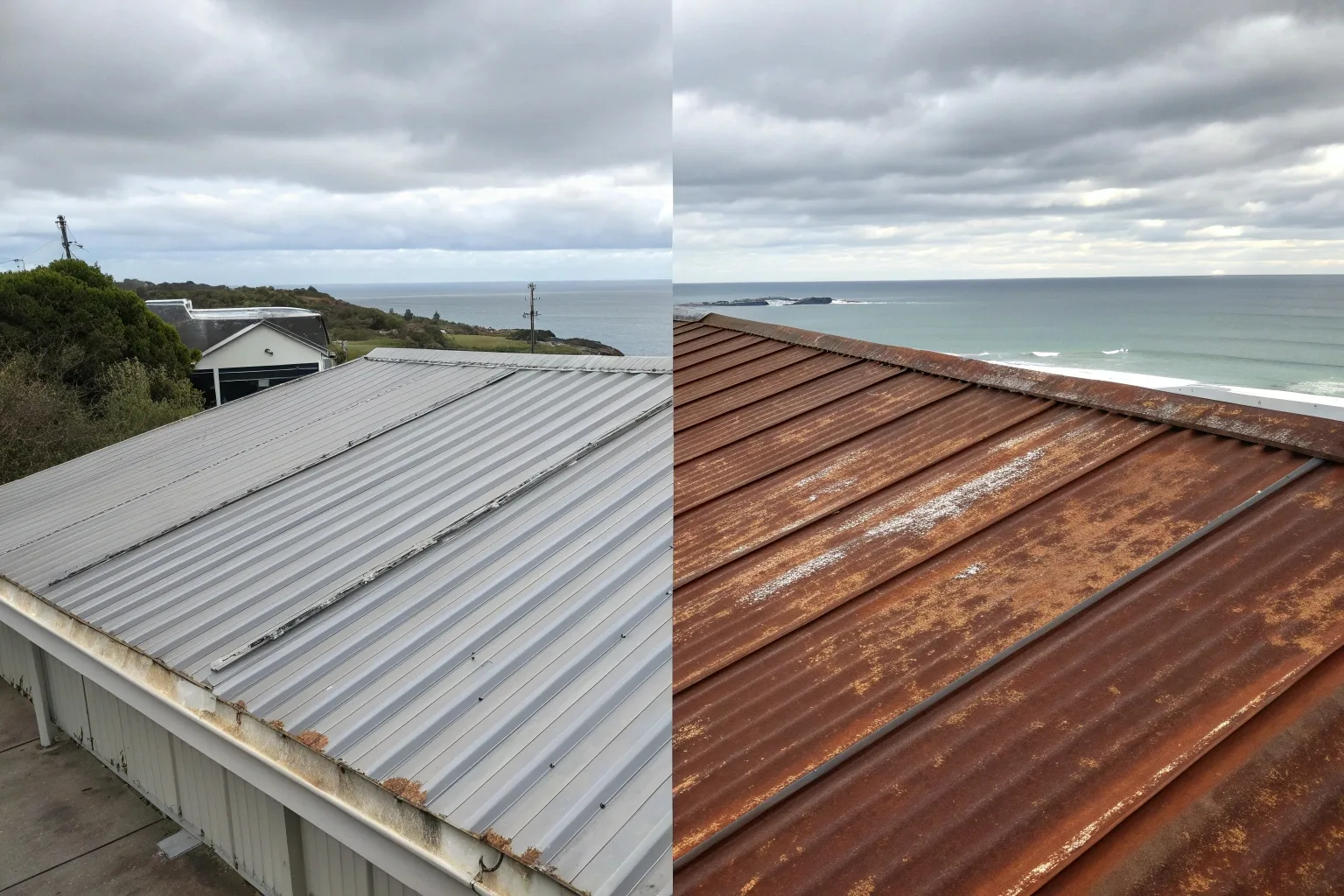
Two metal roofing panels side by side near coastline showing corrosion difference between galvanized and galvalume surfaces.
In coastal exposure, Galvalume retains its finish far longer than traditional galvanized coatings.

3. Advantages and Disadvantages for Roofing Applications

Each material brings its own balance of cost, performance and application suitability:

Property Galvanized Steel Galvalume Steel
Coating Composition ~100% Zinc 55% Al / 43% Zn / 1–2% Si
Corrosion Resistance Moderate Excellent
Heat Reflectivity Medium High
Cost Lower Higher
Best Environment Dry, Inland Coastal, Humid, High UV
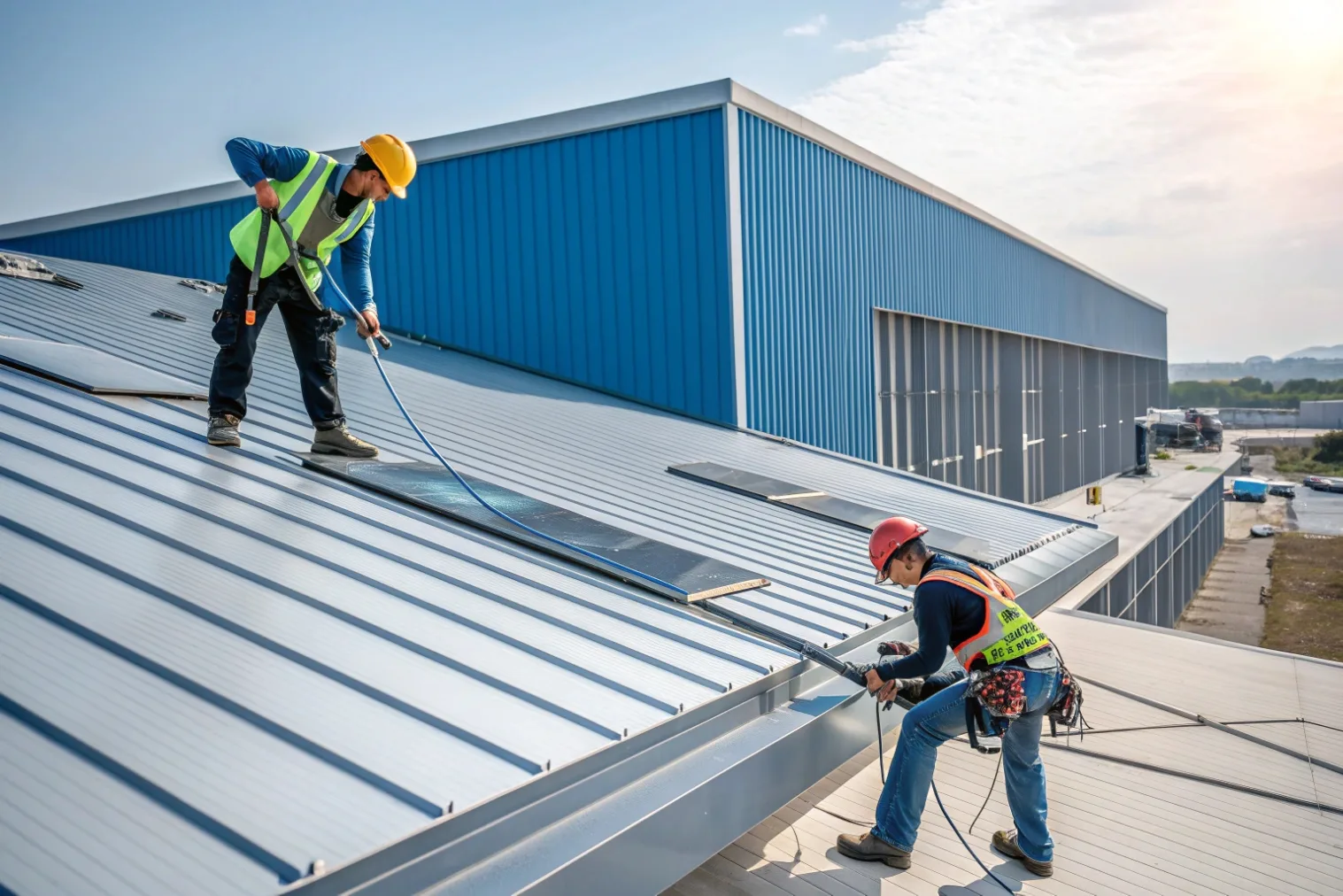
Roofing team installing galvalume metal sheets on industrial building under bright sunlight.
Galvalume metal sheets being installed on an industrial roof — preferred for hot and humid climates.

4. How to Choose the Right Coil for Your Climate and Budget

Selection depends on the balance between environmental exposure and budget priorities:

  • For coastal, industrial, or humid regions: Choose Galvalume for long service life and low maintenance.
  • For moderate or dry inland climates: Galvanized may provide sufficient protection at lower cost.
  • For agricultural or concrete-contact environments: Galvanized sometimes performs better chemically.
  • For architectural or energy-efficient roofs: Galvalume’s high reflectivity helps reduce heat gain.
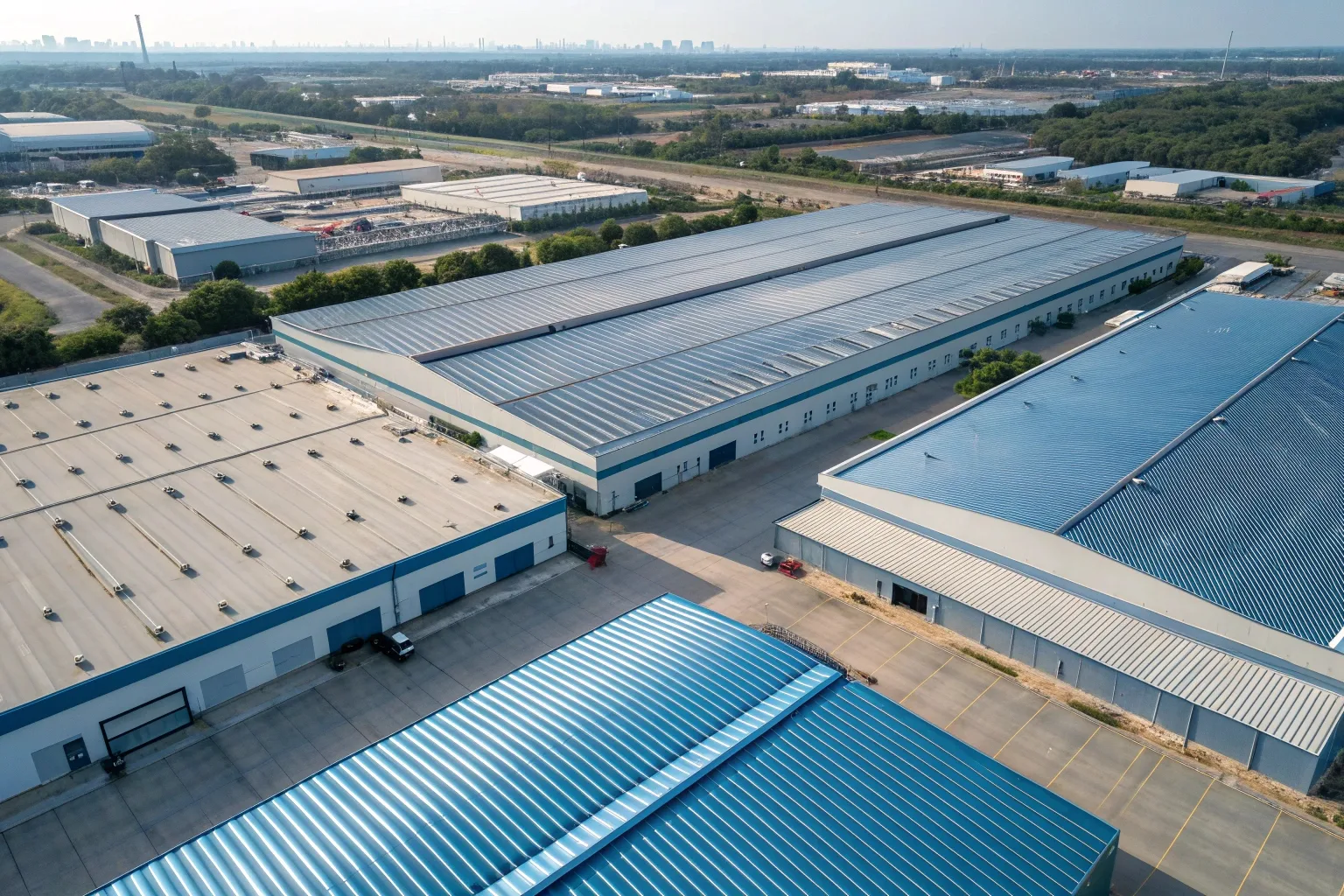
Aerial view of large industrial complex with shiny galvalume and galvanized roofs under sunlight.
Different roofing projects using galvanized and galvalume sheets — selection depends on climate and cost priorities.

Conclusion

For most modern roofing applications, Galvalume steel coils deliver longer service life and better all-weather protection, especially in humid or coastal areas. However, Galvanized steel coils remain a solid, cost-effective option for dry climates or short-term structures. Understanding the environment, exposure and lifecycle cost will help you select the right material for your roofing projects.

Share :

X
Facebook
LinkedIn
Pinterest
WhatsApp

More Tips

How to Identify High-Quality Galvanized Steel Coils Before You Buy?

A modern steel factory showcasing neatly stacked galvanized steel coils ready for export. Galvanized steel coils are the backbone of countless industries — from roofing and construction to automotive manufacturing. But not all galvanized coils are made equal. A small difference in coating weight, substrate quality, or surface finish can significantly affect long-term performance and your customers’ satisfaction. In this article, we’ll break down what truly defines high-quality galvanized steel coils, how to verify them before purchase, and what practical steps buyers can take to avoid costly surprises. 1. Understanding the Core Quality Factors of Galvanized Steel Coils Close-up of galvanized steel surface showing the natural zinc spangle texture. At the heart of every reliable galvanized coil lies a combination of substrate quality, zinc coating, and surface treatment. The substrate (the base steel) determines the coil’s strength and formability. Grades such as DX51D, SGCC, and SGCH are widely recognized in

Read More »
Modern steel factory with Aluzinc steel coils stacked in warehouse.

Why Aluzinc (GL) Coils Are Gaining Popularity in Construction and Roofing?

Why Aluzinc (GL) Coils Are Gaining Popularity in Construction and Roofing Aluzinc (GL) steel coils stored in a modern factory, ready for export. In recent years, Aluzinc (GL) steel coils have become one of the most preferred materials for roofing, wall cladding, and industrial construction. Their growing popularity is not just a trend—it’s a reflection of real performance advantages over traditional galvanized steel. This article explores why more global buyers, engineers, and project contractors are switching to Aluzinc, and what makes it the smarter long-term investment for modern construction. Table of Contents 1. What Makes Aluzinc (GL) Steel Coils Different from Galvanized Coils 2. Advantages of Aluzinc Coatings in Harsh Environments 3. Applications in Modern Roofing and Structural Projects 4. Market Insights: Why Global Buyers Are Switching to GL Coils Claim Final Thoughts 1. What Makes Aluzinc (GL) Steel Coils Different from Galvanized Coils Comparison between galvanized (zinc-coated) and Aluzinc

Read More »

How Do You Choose the Right Finish for Color-Coated Steel Coils to Ensure Long-Term Performance?

How Do You Choose the Right Finish for Color-Coated Steel Coils to Ensure Long-Term Performance? Color-coated steel coils (also known as PPGI and PPGL) are widely used in construction, appliances, and industrial manufacturing. Choosing the right coating finish is crucial to ensure long-term durability, appearance, and protection against harsh environmental conditions. This guide explains how to choose the right finish to achieve long-lasting performance. Table of Contents 1. Introduction to Color-Coated (PPGI/PPGL) Steel Coils and Their Uses 2. Comparing Coating Systems: Polyester, SMP, PVDF, and More 3. Key Factors to Evaluate Before Selecting a Color Coating 4. How Proper Maintenance Extends the Lifespan of Color-Coated Coils 1. Introduction to Color-Coated (PPGI/PPGL) Steel Coils and Their Uses Color-coated steel coils are pre-painted galvanized (PPGI) or galvalume (PPGL) steel sheets that combine aesthetics with corrosion protection. They are widely applied in roofing systems, wall panels, home appliances, and decorative construction materials. These

Read More »
Panoramic view of steel coils and logistics trucks representing the roofing steel supply chain from mill to roof.

How does the supply chain of roofing steel sheets work, from mill to roof?

From Mill to Roof: Understanding the Roofing Steel Supply Chain Claim: The roofing steel sheet supply chain is a story of transformation — from raw material to a finished product protecting homes and buildings. Understanding how each step connects helps buyers, distributors, and contractors ensure quality, reliability, and timely delivery. Table of Contents 1. How Steel Sheets Are Produced from Raw Material to Finished Coil 2. Logistics and Quality Control in Steel Sheet Exportation 3. Common Challenges in the Roofing Steel Supply Chain 4. Building Reliable Partnerships Between Mills, Traders, and End Users A panoramic view of the roofing steel supply chain — from mill to logistics. 1. How Steel Sheets Are Produced from Raw Material to Finished Coil Hot rolled coils being processed in a modern steel mill. Every roofing sheet begins its journey deep inside a steel mill. Iron ore, scrap steel, zinc, and aluminum are melted and

Read More »
Trusted Steel Supplier

Build Stronger with Premium Steel Solutions

Explore our wide range of galvanized, galvalume, and color-coated steel products for your next project.

Get A Quick Price Today