
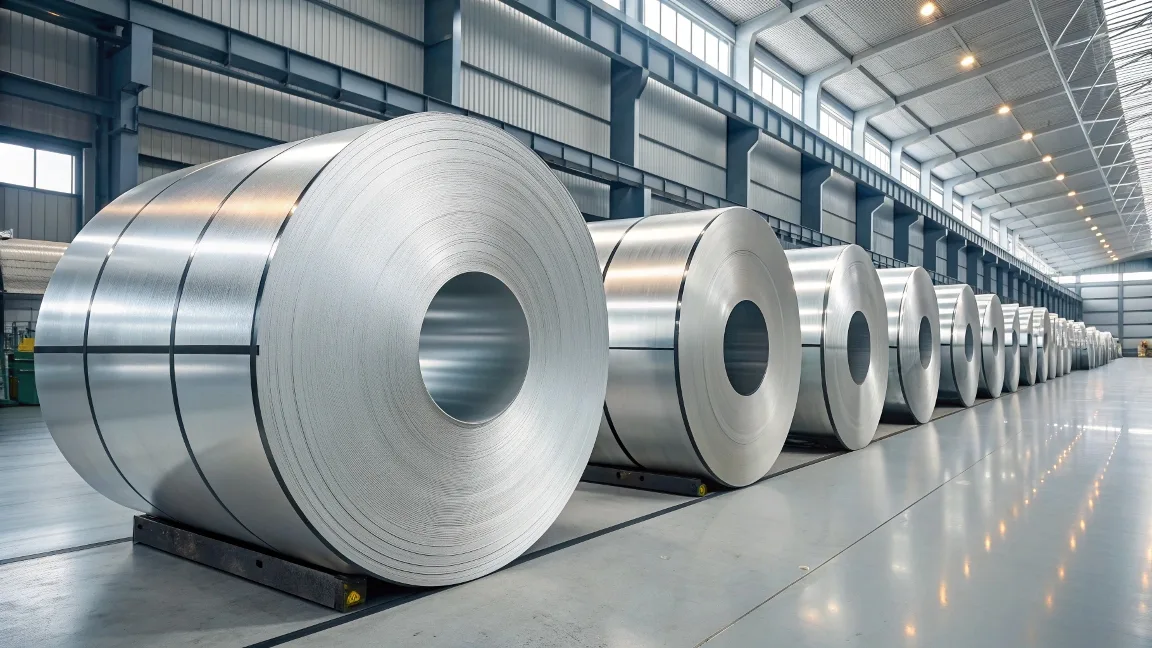
Large galvanized steel coils arranged neatly in a modern factory warehouse, symbolizing strength and quality in industrial manufacturing.

Galvanized Steel Coil: The Backbone of Industrial Manufacturing

Table of Contents

  1. Introduction
  2. How Galvanized Steel Coils Are Made
  3. Key Advantages in Industrial Manufacturing
  4. Common Applications in Industry
  5. Claim
  6. Selecting the Right Coil Supplier
  7. Conclusion

Introduction

Galvanized steel coil is a critical material in today’s manufacturing world. Known for its corrosion resistance, mechanical strength, and cost-effectiveness, it plays an essential role in everything from automotive production to HVAC systems. This article explores how galvanized coils are produced, their key advantages, and why they’re an industrial standard worldwide.

How Galvanized Steel Coils Are Made

Galvanized steel coils are made by applying a protective zinc coating to cold-rolled steel. This can be done through:

– **Hot-dip galvanizing (HDG)**: Immersing the steel in molten zinc
– **Electro-galvanizing (EG)**: Using electric current to apply zinc

Common Specifications:

– Thickness: 0.2mm – 3.0mm
– Coating: Z40 – Z275
– Width: Up to 1250mm
– Surface: Regular/zero spangle, skin-passed, oiled or dry

Key Advantages in Industrial Manufacturing

1. Corrosion Resistance

The zinc layer protects the base metal from oxidation, making it ideal for both indoor and outdoor use.

2. Strength and Formability

Galvanized steel is strong yet flexible, making it suitable for bending, stamping, and deep drawing.

3. Cost-Effectiveness

Compared to stainless steel, it offers an affordable alternative with sufficient performance for most industrial needs.

4. Sustainability

Fully recyclable and long-lasting, galvanized steel supports sustainable development goals.
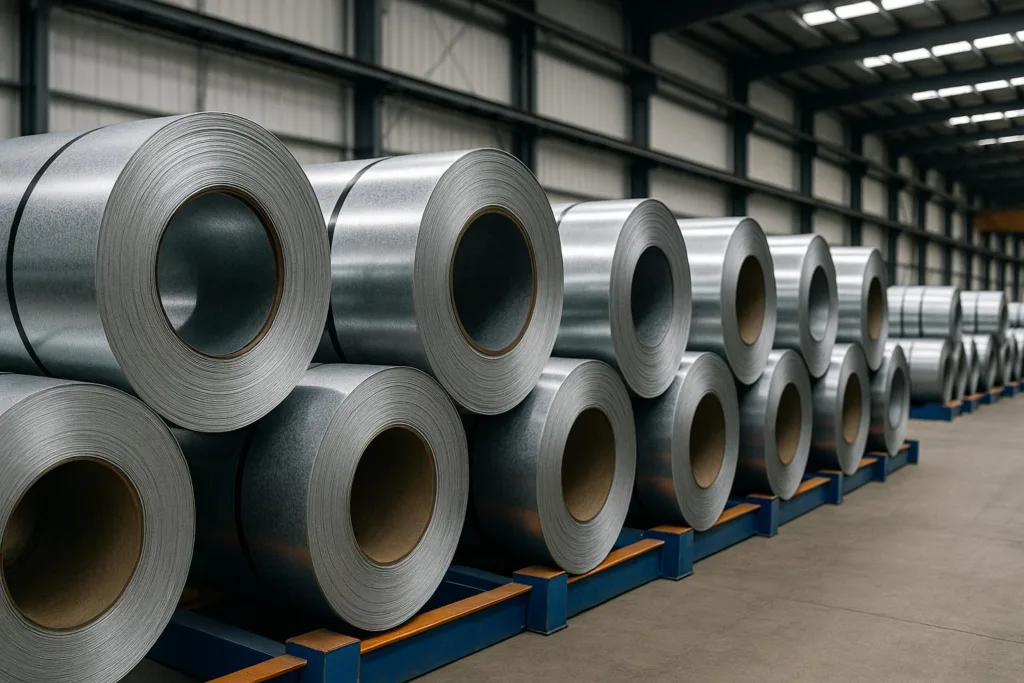
Galvanized steel coils neatly stored in an industrial warehouse

Common Applications in Industry

– **Automotive parts**: body panels, frames, chassis components
– **Construction**: HVAC ductwork, steel framing, roofing
– **Appliances**: washing machines, refrigerators, air conditioners
– **Agricultural equipment**: silos, grain bins, fencing
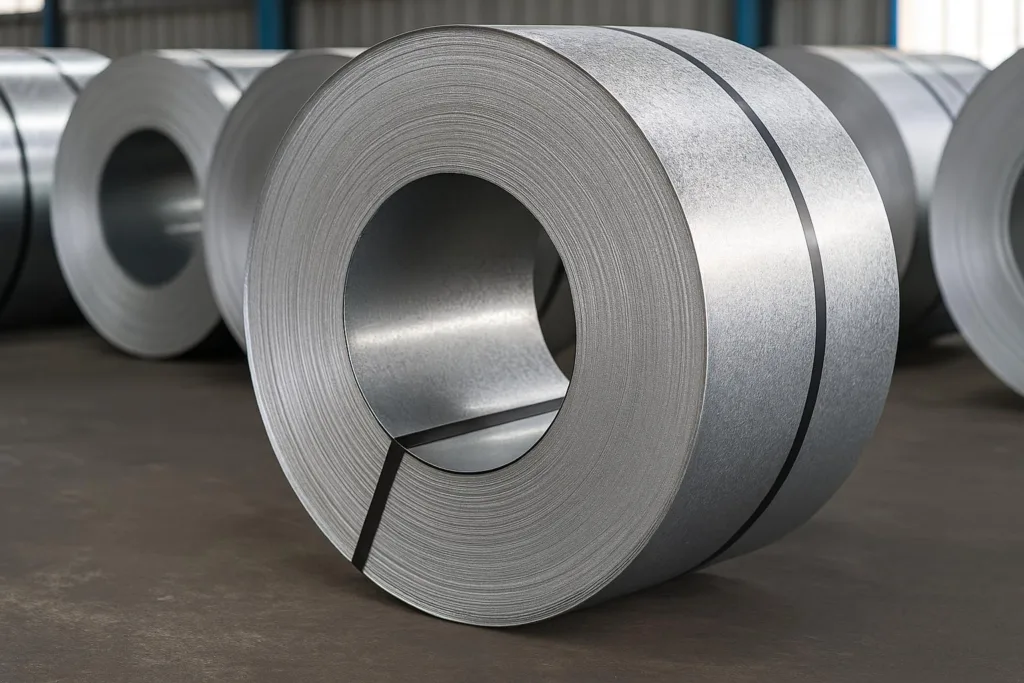
Close-up view of galvanized steel used in automotive manufacturing

Claim: As global industries seek durable, scalable, and sustainable materials, galvanized steel coils remain a strategic pillar in the modern supply chain.

Claim

Galvanized steel coil provides the perfect balance of performance and cost-efficiency, making it indispensable to modern manufacturing systems.

Selecting the Right Coil Supplier

Choosing the right supplier ensures consistency, durability, and compliance. Key factors to evaluate:

– **Coating weight & uniformity**
– **Spangle control and surface finish**
– **Certifications**: ISO, ASTM A653, JIS G3302
– **Timely delivery and reliable quality assurance**

Conclusion

Galvanized steel coil continues to be the preferred solution for manufacturers who need durability, cost-efficiency, and excellent corrosion resistance. As industries move toward more sustainable and durable solutions, galvanized coil will remain at the heart of industrial progress.


Share :

X
Facebook
LinkedIn
Pinterest
WhatsApp

More Tips

Modern steel factory with Aluzinc steel coils stacked in warehouse.

Why Aluzinc (GL) Coils Are Gaining Popularity in Construction and Roofing?

Why Aluzinc (GL) Coils Are Gaining Popularity in Construction and Roofing Aluzinc (GL) steel coils stored in a modern factory, ready for export. In recent years, Aluzinc (GL) steel coils have become one of the most preferred materials for roofing, wall cladding, and industrial construction. Their growing popularity is not just a trend—it’s a reflection of real performance advantages over traditional galvanized steel. This article explores why more global buyers, engineers, and project contractors are switching to Aluzinc, and what makes it the smarter long-term investment for modern construction. Table of Contents 1. What Makes Aluzinc (GL) Steel Coils Different from Galvanized Coils 2. Advantages of Aluzinc Coatings in Harsh Environments 3. Applications in Modern Roofing and Structural Projects 4. Market Insights: Why Global Buyers Are Switching to GL Coils Claim Final Thoughts 1. What Makes Aluzinc (GL) Steel Coils Different from Galvanized Coils Comparison between galvanized (zinc-coated) and Aluzinc

Read More »

How Do You Choose the Right Finish for Color-Coated Steel Coils to Ensure Long-Term Performance?

How Do You Choose the Right Finish for Color-Coated Steel Coils to Ensure Long-Term Performance? Color-coated steel coils (also known as PPGI and PPGL) are widely used in construction, appliances, and industrial manufacturing. Choosing the right coating finish is crucial to ensure long-term durability, appearance, and protection against harsh environmental conditions. This guide explains how to choose the right finish to achieve long-lasting performance. Table of Contents 1. Introduction to Color-Coated (PPGI/PPGL) Steel Coils and Their Uses 2. Comparing Coating Systems: Polyester, SMP, PVDF, and More 3. Key Factors to Evaluate Before Selecting a Color Coating 4. How Proper Maintenance Extends the Lifespan of Color-Coated Coils 1. Introduction to Color-Coated (PPGI/PPGL) Steel Coils and Their Uses Color-coated steel coils are pre-painted galvanized (PPGI) or galvalume (PPGL) steel sheets that combine aesthetics with corrosion protection. They are widely applied in roofing systems, wall panels, home appliances, and decorative construction materials. These

Read More »
Panoramic view of steel coils and logistics trucks representing the roofing steel supply chain from mill to roof.

How does the supply chain of roofing steel sheets work, from mill to roof?

From Mill to Roof: Understanding the Roofing Steel Supply Chain Claim: The roofing steel sheet supply chain is a story of transformation — from raw material to a finished product protecting homes and buildings. Understanding how each step connects helps buyers, distributors, and contractors ensure quality, reliability, and timely delivery. Table of Contents 1. How Steel Sheets Are Produced from Raw Material to Finished Coil 2. Logistics and Quality Control in Steel Sheet Exportation 3. Common Challenges in the Roofing Steel Supply Chain 4. Building Reliable Partnerships Between Mills, Traders, and End Users A panoramic view of the roofing steel supply chain — from mill to logistics. 1. How Steel Sheets Are Produced from Raw Material to Finished Coil Hot rolled coils being processed in a modern steel mill. Every roofing sheet begins its journey deep inside a steel mill. Iron ore, scrap steel, zinc, and aluminum are melted and

Read More »

How Can Zinc and Aluminum-Zinc Coatings Maximize Corrosion Resistance in Steel?

Maximizing Corrosion Resistance: A Deep Dive into Zinc and Aluminum-Zinc Coatings Claim: Zinc and aluminum-zinc coatings don’t just cover steel — they extend its life. With the right coating type, thickness, and detailing, you can dramatically reduce corrosion risk and lower lifetime costs. Table of Contents 1. Why Corrosion Protection Is Critical in Steel Applications 2. The Science Behind Zinc vs. Alu-Zinc Coating Systems 3. Real-World Performance: How Coating Thickness Affects Durability 4. Choosing the Right Coating Type for Your Climate and Budget Conclusion Main comparison: zinc-coated (galvanized) vs aluminum-zinc (Aluzinc) coated steel coils. 1. Why Corrosion Protection Is Critical in Steel Applications Think of steel as the backbone of a building or structure — but left unprotected, it will rust, weaken, and fail. Corrosion is often invisible at first, but over months and years it eats away at strength, increases maintenance costs, and shortens warranties. Protective metallic coatings (like

Read More »
Trusted Steel Supplier

Build Stronger with Premium Steel Solutions

Explore our wide range of galvanized, galvalume, and color-coated steel products for your next project.

Get A Quick Price Today